New shift aims to ease overtime, improve safety across the city
Norfolk is taking a rare step among Virginia cities by adding a fourth operational shift in its Fire-Rescue department, a change city leaders say will reduce mandatory overtime and improve firefighter health without cutting pay.
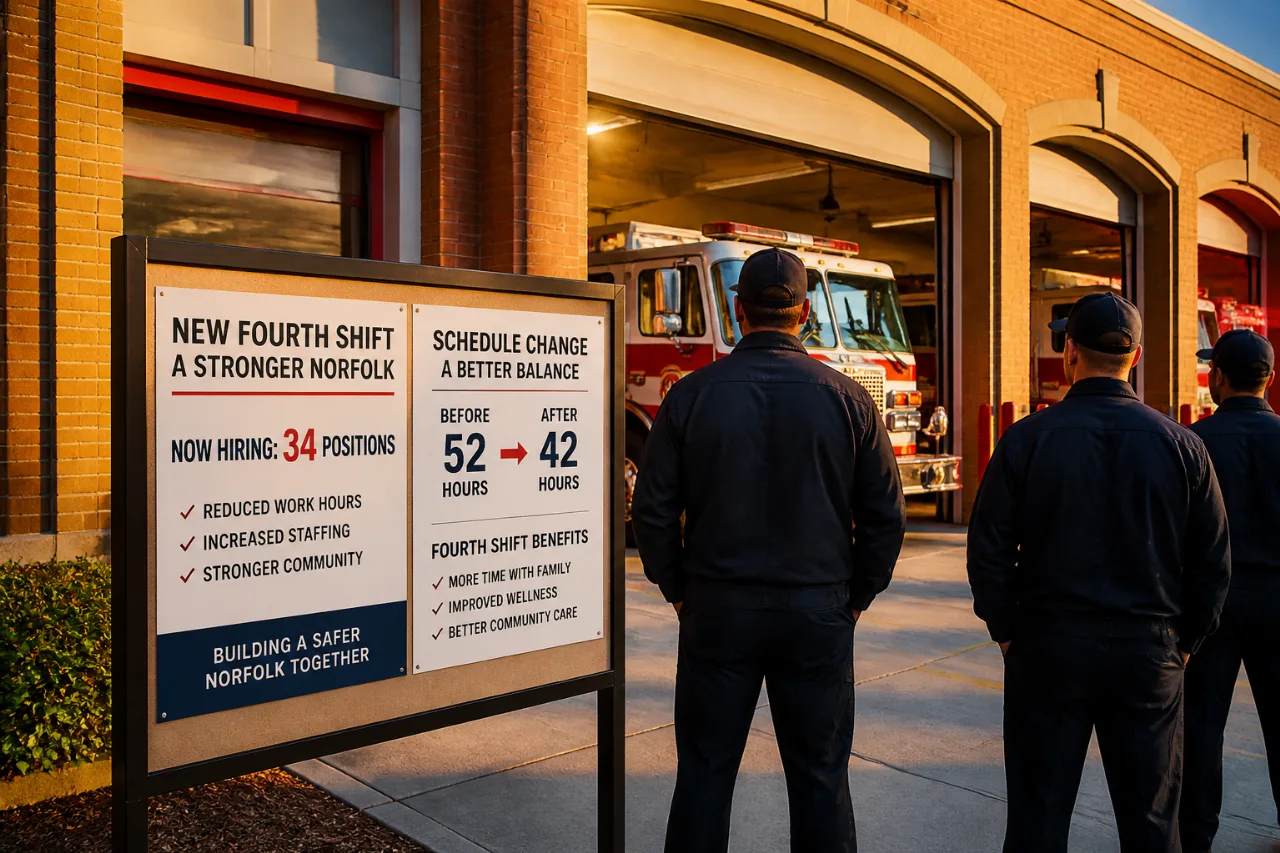
The city budget, effective July 1, includes $1.8 million to create the additional shift. Under the new schedule, the average scheduled workweek for Norfolk firefighters will drop from 52 hours to 42 hours. The department must hire 34 additional positions to staff the change and is recruiting immediately, including a lateral hiring process that closes at midnight on July 17.
- New funding: $1.8 million
- Average scheduled hours: from 52 to 42 per week
- New hires required: 34 positions
| Metric | Before | After |
|---|---|---|
| Average scheduled hours/week | 52 | 42 |
| Additional positions needed | 34 | |
Norfolk Fire-Rescue currently operates three alternating shifts that cover 24 hours. Department leaders and union representatives say the three-shift model has led to frequent mandatory overtime as crews scramble to maintain minimum staffing. Deputy Fire Chief Wayne Watson told News 3 that overtime is not unique to Norfolk but has become a persistent problem regionally and nationally.
"There's days where they are unable to go home so we can maintain our minimum staffing levels, and they're asked to stay an extra 12 hours," Watson said.
Union leaders emphasized the human consequences. Mark Old, a Norfolk firefighter and president of IAFF Local 68, pointed to long-term health risks associated with chronic fatigue and burnout. "The number one cause of firefighter death is heart disease," Old said, linking excessive work hours to health outcomes.
Norfolk’s plan aligns with a recent Virginia law passed earlier this year encouraging reduced firefighter work hours. City officials framed the fourth shift as both a worker-health measure and a public-safety investment: better-rested crews, the argument goes, respond more effectively to fires and medical emergencies across the city.
Operationally, the city is pushing for a quick onboarding path. Lateral hires who are already certified can be working within about three weeks rather than months, allowing the department to reach minimum staffing for the new schedule more rapidly. The department is actively recruiting to fill the 34 positions.
For Norfolk residents, the change means the city is spending to stabilize emergency staffing and to reduce the pool of forced overtime that has stretched fire and EMS crews. It also puts Norfolk among the earliest adopters of an expanded shift model in Hampton Roads — city officials say it is the first in the region and among the largest in the state to implement the change.
How quickly the department fills the new roles will determine whether the intended benefits — fewer long shifts, lower fatigue, and improved response capacity — are realized. The initiative will be watched locally and statewide as other jurisdictions weigh similar steps to address firefighter burnout and safety.