New York City health authorities are investigating a cluster of 46 confirmed cases of Legionnaires’ disease in the Carnegie Hill and Yorkville neighborhoods after preliminary screening found positive PCR results in 31 cooling towers, including at the Guggenheim Museum, officials said Friday.
Immediate cleaning as precaution
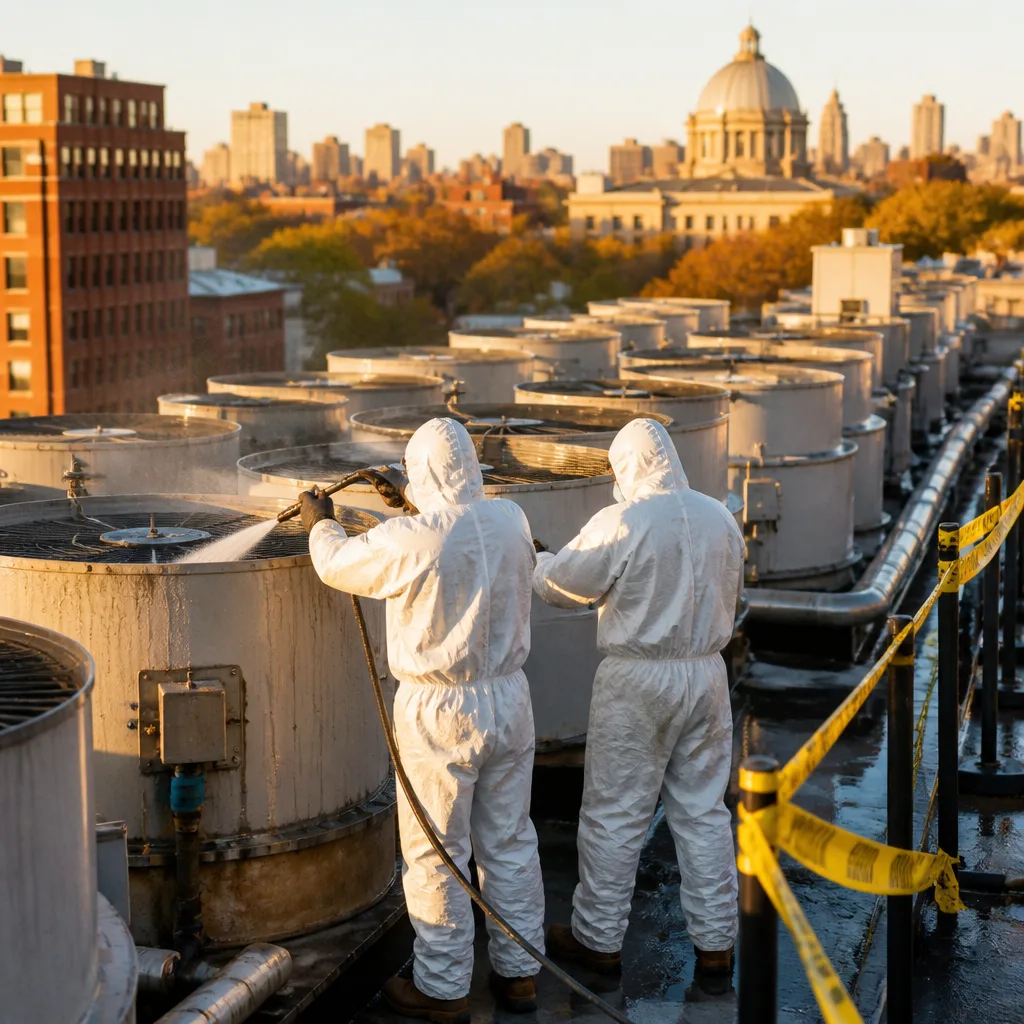
The city has ordered cleaning and disinfection of any cooling tower that returned a positive polymerase chain reaction test result, a faster intervention than waiting for confirmatory culture testing. Health officials said the accelerated remediation is intended to lower potential risk while laboratory analyses continue.
- Confirmed cases: 46
- Hospitalized: 22
- Cooling towers PCR-positive so far: 31
- Cooling towers sampled to date: more than 180
Officials cautioned that a PCR screening result does not prove a specific building was the source of infections. PCR testing detects bacterial genetic material quickly but does not distinguish live, infectious bacteria from nonviable remnants. Confirmatory culture tests, which determine whether live Legionella bacteria are present, typically take about two weeks to complete.
What investigators are doing and what residents should know
Investigators continue to analyze samples from cooling towers across affected ZIP codes and said additional properties could be identified as testing proceeds. They also noted that new cases may emerge because symptoms can appear up to two weeks after exposure.
| Metric | Number |
|---|---|
| Confirmed Legionnaires’ cases | 46 |
| People hospitalized | 22 |
| Cooling towers PCR-positive | 31 |
| Cooling towers sampled | More than 180 |
Health officials emphasized that it remains safe to drink tap water, to shower and to use home air conditioners in the neighborhoods under investigation. Legionnaires’ disease is a form of pneumonia caused by inhaling water droplets containing live Legionella bacteria; common symptoms include fever, muscle aches, cough, shortness of breath, chest pain, nausea and confusion.
The city’s approach—ordering immediate cleaning after a positive PCR result—reflects an effort to reduce exposure risk while waiting for culture confirmations. Public-health responses like this balance speed and certainty: PCR provides a rapid signal that triggers remediation, while cultures provide the definitive evidence about whether viable bacteria capable of causing illness were present in a sample.
Investigators and health officials said they will update the public as culture results and further sampling become available and urged anyone who lived, worked or visited the area since late June and who develops compatible symptoms to seek medical attention.
As the investigation proceeds, buildings identified with PCR-positive towers will undergo disinfection and follow-up testing. Officials cautioned that the list of affected properties could grow as more samples are analyzed and noted that the incubation period means additional cases could be reported in the coming days.
This cluster underscores the importance of routine maintenance and monitoring of building water systems in dense urban areas, and it highlights how rapid molecular screening can be used as a public-health tool to prompt early intervention.