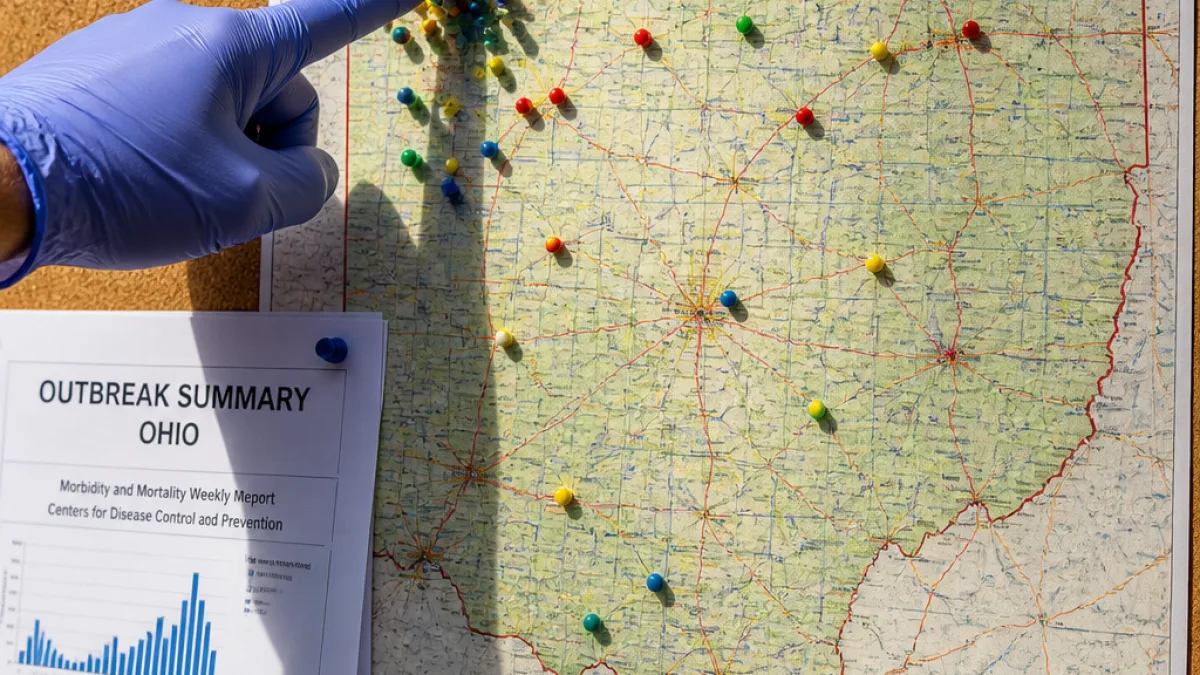
The Ohio Department of Health says the state has recorded 1,192 cases of cyclosporiasis in 70 counties so far in 2026, with 86 people hospitalized, as public health officials work to trace the source of a growing multistate outbreak.
Scope and speed of the outbreak
The number of reported Ohio cases has more than tripled over a seven-day span, rising from 364 cases on July 9 to 1,192 as of July 16. Health authorities report that the vast majority of infections — all but nine — occurred in June and July, and most have been reported since June 20.
State health officials say the outbreak is linked to cases in other states. The U.S. Centers for Disease Control and Prevention has confirmed 1,645 cases nationally, with another about 5,100 cases under investigation. Michigan has reported the largest number of cases, more than 3,300 since June 22, according to media reports.
Where cases are concentrated
While cases have been reported across the state, the largest clusters are in northwest Ohio:
- Lucas County: 249 cases (up from 86 the previous week)
- Wood County: 129 cases (up from 49 the previous week)
| Measure | Count |
|---|---|
| Ohio cases (2026) | 1,192 |
| Ohio counties affected | 70 |
| Ohio hospitalizations | 86 |
| Confirmed U.S. cases (CDC) | 1,645 |
| U.S. cases under investigation | ~5,100 |
Cause, treatment and guidance
Cyclosporiasis is caused by the microscopic parasite Cyclospora cayetanensis, which typically spreads when food or water becomes contaminated with feces. Past outbreaks have been tied to fresh produce. Ohio officials say no single source has been confirmed in this outbreak. Michigan investigators have focused on lettuce and salad greens, but that finding has not been confirmed for Ohio.
The illness commonly produces profuse, watery diarrhea and other gastrointestinal symptoms. It is treatable with antibiotics; some otherwise healthy people may also recover without medication. Public health authorities continue recommending basic prevention steps:
- Wash hands thoroughly with soap and water after using the restroom and before eating or preparing food.
- Rinse fruits and vegetables under running water before consumption; do not rely on washing alone to remove all contamination.
- Discard produce if it was part of a recalled or suspect shipment identified by health officials.
State and federal investigators are continuing interviews, traceback work and laboratory testing to identify any contaminated food items or supply chains. Until a specific source is identified, health departments advise vigilance when consuming fresh produce, particularly in areas with clusters of reported cases.
The outbreak illustrates how quickly foodborne parasites can spread across county and state lines and the strain such events can place on local public health resources. Officials have not issued statewide recalls tied to the Ohio cases as of the latest update.
Residents who believe they may be ill should contact their health care provider. Clinicians suspecting cyclosporiasis may order testing and, when appropriate, prescribe recommended antibiotic therapy.