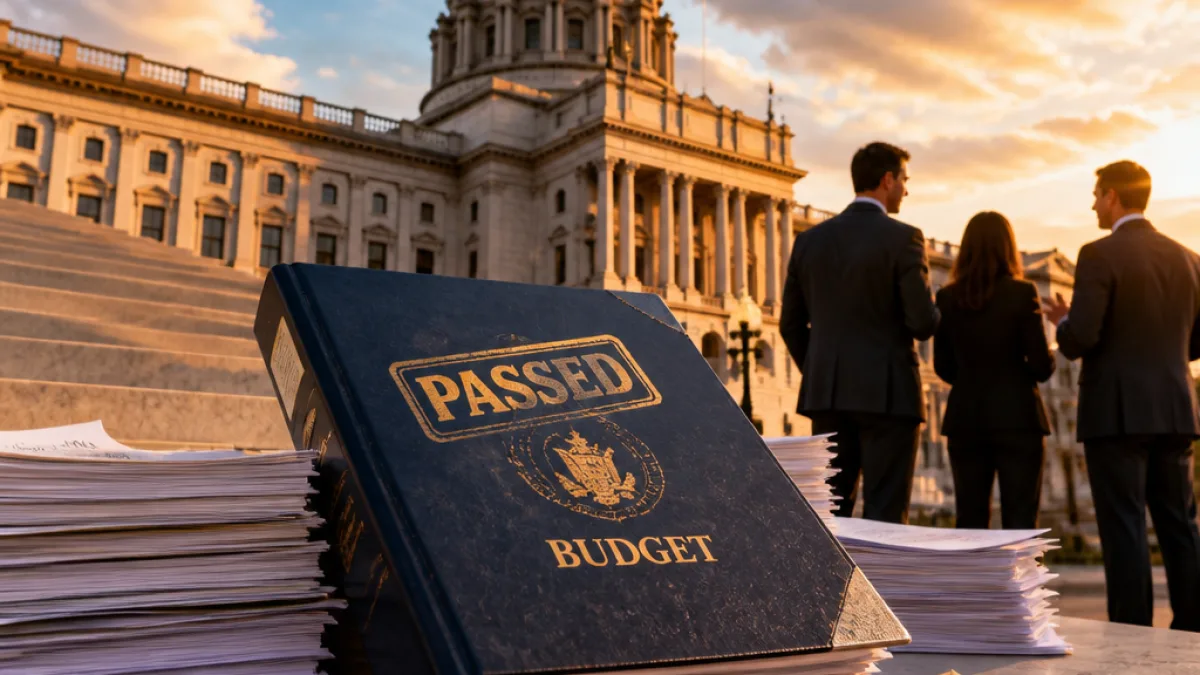
HARRISBURG — Pennsylvania lawmakers on Sunday approved a $50.8 billion state budget and Gov. Josh Shapiro signed the measure into law, delivering significant new education funding while leaving several contentious policy questions unresolved.
Major spending priorities, fiscal maneuvers
The final package, negotiated behind closed doors and advanced during a rare weekend session, directs more than $900 million toward K-12 and higher education programs and provides pension increases for many retired public employees. It also requires data centers to report their annual energy and water use.
To preserve the state’s rainy day reserve — nearly $8 billion at the time lawmakers were negotiating — the plan relies on accounting shifts rather than new revenue sources. Sponsors moved more than $500 million from off-budget special accounts, tapped unused agency balances and delayed payments to managed-care organizations for Medicaid by about $1.3 billion.
“This budget allows the commonwealth to fight yet another day,”
Senate Appropriations Chair Scott Martin, R-Lancaster, said on the Senate floor as the spending bill won approval.
Votes and timing
The package cleared the Senate 44-6 and later passed the House by a 167-35 margin. Final votes came nearly two weeks after the June 30 statutory deadline. Lawmakers and the governor held a signing ceremony in Harrisburg on Sunday evening.
What the budget does — and doesn’t — include
- More than $900 million for education, including targeted aid to low-income districts and other student-focused spending.
- Pension adjustments that raise benefits for thousands of retired school, state and emergency response workers who retired before 2001.
- New reporting requirements for data centers’ energy and water consumption.
- No changes to the rainy day fund; the budget preserves the reserve through fund shifts and delayed payments.
- No new revenue measures or major regulatory reforms — for example, the plan does not tackle recent questions over skill games or other divisive policy issues.
House Appropriations Chair Jordan Harris, D-Philadelphia, defended the payment delays as a timing issue rather than a cut to services, saying the budget will ensure health providers are paid. He told reporters after committee action that the plan ensures healthcare remains available to Medicaid enrollees.
Local and statewide stakes
For Pennsylvania counties and school districts, the additional education dollars represent immediate relief for districts serving high concentrations of low-income students. Targeted grants and adequacy funding have been central to state education debates in recent years; the new dollars will be closely watched by district leaders as they plan fall budgets and staffing.
For state fiscal managers and political leaders, the deal preserves the state’s financial cushion but renews questions about long-term revenue and structural spending. Fiscal conservatives criticized the move to cover expenses with one-time shifts and payment timing, arguing the approach avoids confronting the long-term gap between spending and revenue.
| Item | Amount |
|---|---|
| Total budget | $50.8 billion |
| Education increase | More than $900 million |
| Rainy day fund preserved | Nearly $8 billion |
| Special funds reallocated | More than $500 million |
| Delayed Medicaid MCO payments | $1.3 billion |
Lawmakers did not use the budget to settle ongoing debates over gambling regulation, technology taxes or other high-profile policy fights that have divided legislators. That choice reduces the chance of immediate controversy, but it also leaves unresolved questions for future sessions and for communities that seek clearer direction on regulations and revenue policy.
The legislation’s backers say the combination of increased education funding and protection of the state’s savings strikes a pragmatic balance in the near term. Opponents say using one-time accounting moves postpones difficult decisions about recurring revenue and long-term spending commitments.
As local school districts and municipal governments digest the details, county officials and service providers will be watching how delayed payments and fund reallocations play out in the coming months.
Reporting from Harrisburg contributed to this article.