Theory and practice of device authentication took a step forward as researchers at King Abdullah University of Science and Technology (KAUST) reported a new method that uses the intrinsic physical properties of tiny lasers to verify a device’s identity. Published in Nature Electronics, the work aims to replace or supplement conventional passwords and stored cryptographic keys with a hardware-derived digital signature that is hard to copy.
How the technology works
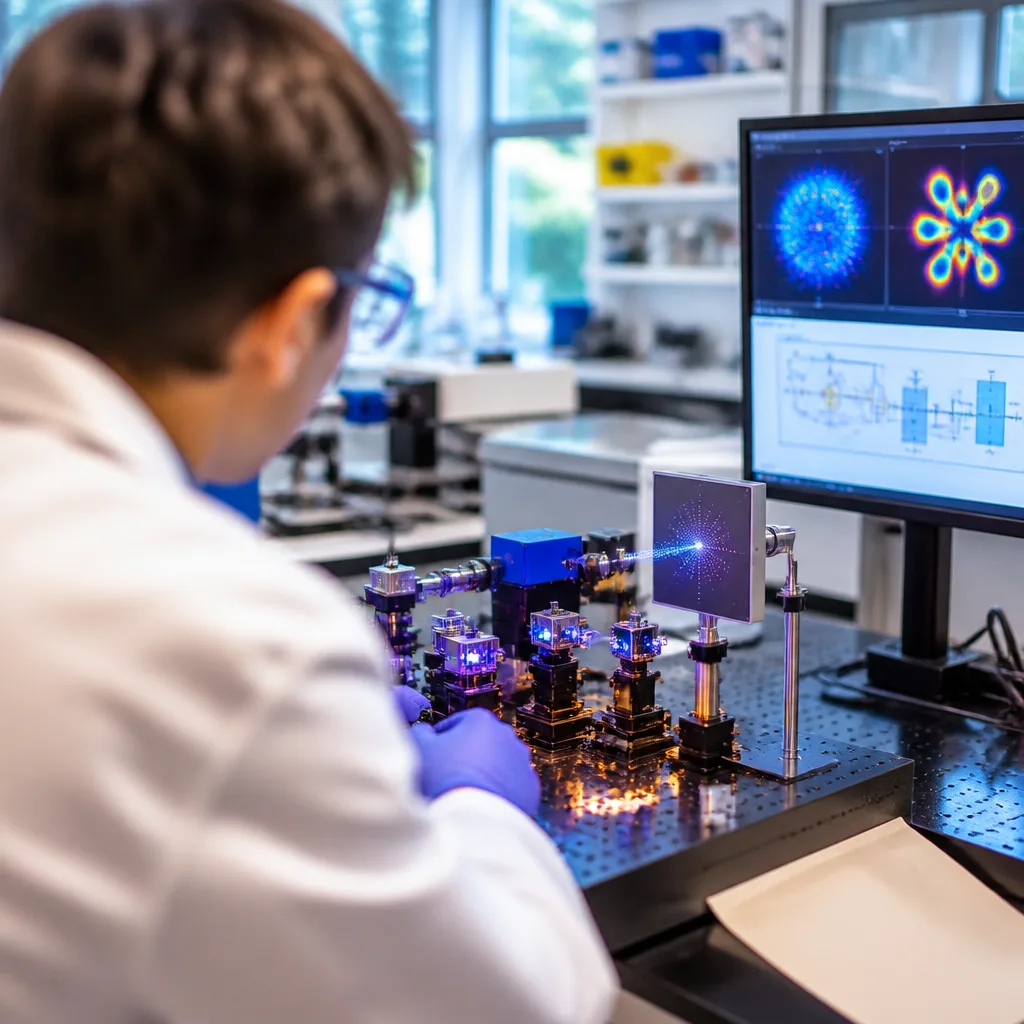
KAUST scientists harnessed microscopic laser structures that emit light patterns unique to each device. Those patterns are captured and analyzed by artificial intelligence models, which convert the distinctive optical response into a fast, verifiable digital fingerprint. Because the signature arises from uncontrollable manufacturing variations in the laser itself, each device’s fingerprint is effectively unclonable.
“Every connected device needs a way to prove that it is genuine,” said Assistant Professor Yating Wan, who led the research. “Today this often relies on stored passwords or security keys. Our approach explores whether devices can instead identify themselves using characteristics that are inherently part of the hardware.”
Why it matters
Networks that support cloud computing, artificial intelligence and industrial sensors increasingly depend on being able to trust every participating device. Stored credentials can be stolen, cloned or exposed in supply-chain attacks. A hardware-rooted fingerprint would reduce reliance on key provisioning and might scale more efficiently to millions of endpoints while limiting attack surfaces.
- Speed: Lab tests produced authentication responses at very high rates, suitable for large systems.
- Energy efficiency: The method consumed little power during testing, a benefit for data centers and edge devices.
- Scalability: The approach is aimed at environments with millions of devices, such as cloud and AI infrastructure.
Limitations and next steps
The research is experimental and reported results are from laboratory conditions. The paper highlights performance and efficiency in tests but does not claim deployment-ready status; real-world systems will have to confront environmental variability, long-term device aging and adversarial attempts to model or spoof optical signatures. The KAUST team used AI to recognize the patterns quickly, but integrating this into existing authentication ecosystems will require standardization and interoperability work.
| Aspect | Reported lab result |
|---|---|
| Authentication speed | Very high (lab testing) |
| Energy use | Very low (lab testing) |
| Primary application areas | Cloud, AI infrastructure, connected devices |
Photonics-based fingerprints offer an appealing alternative to software-only locks and may complement existing hardware security modules. As networks expand and adversaries probe supply chains and device fleets, methods that root identity in the physical device could reshape how operators protect systems. The path from laboratory demonstration to industry adoption will require further testing under field conditions and engagement with standards bodies to ensure the technique can be trusted at scale.