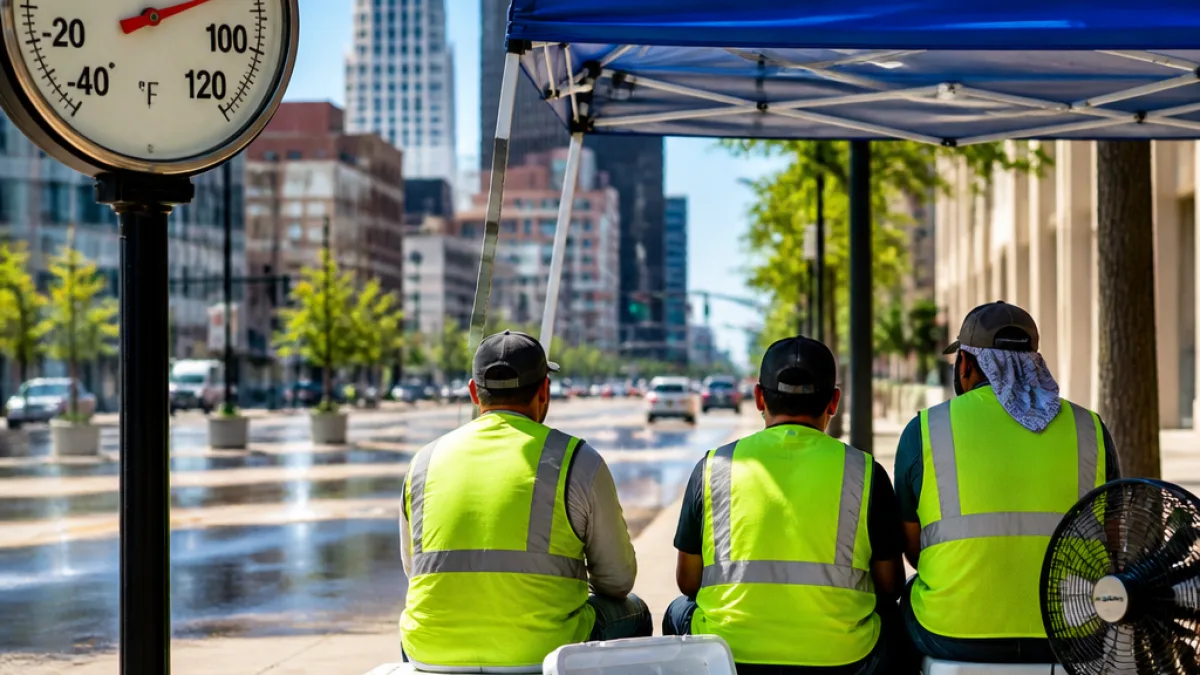
Heat wave pressures Rochester workplaces and public health
Rochester faces recurring stretches of extreme heat each summer that pose a direct risk to workers exposed to the elements or working in heat-enhanced environments. Southeast Minnesota typically records about 10 to 15 days per season with temperatures topping 90 degrees, and those conditions strain staffing, safety practices and workplace comfort across the city.
Local coverage compiled a list of occupations that become especially difficult when high temperatures settle in.
"These 13 Rochester Jobs Are Brutal"summarizes a pattern residents know well: while many people remain in air-conditioned offices or clinics, others continue to perform physically demanding labor outdoors or in places where cooling systems are inadequate.
Concerns have moved beyond inconvenience. Recent reporting referenced a Rochester restaurant whose employees reportedly quit after contending with a kitchen that reached roughly 100 degrees and persistent HVAC problems. That episode underscores broader questions about employer responsibility and public health protections during heat events.
- Heat exposure affects workers in construction, deliveries, landscaping and foodservice.
- Indoor workplaces with poor ventilation or failing HVAC systems can approach outdoor heat levels.
- Local businesses report staffing and morale impacts when sustained high temperatures persist.
Heat illnesses — from heat exhaustion to heat stroke — are a medical concern for employers and county health officials. For Rochester, where major employers include health care facilities that operate year-round, balancing climate control, staffing and patient care adds complexity during heat waves.
Public agencies and worker advocates typically recommend practical steps employers can take: provide shade and water for outdoor crews, schedule heavier tasks for cooler parts of the day, ensure indoor cooling systems are maintained, and allow additional breaks when temperatures spike. Implementing these measures can reduce short-term medical incidents and limit staff turnover tied to working conditions.
| Metric | Local detail |
|---|---|
| Average 90+° days (Southeast MN) | 10–15 days |
| Reported kitchen temperature in recent incident | ~100° |
For Rochester leaders, the stakes include worker safety, business continuity and the reputational cost to employers who fail to address preventable hazards. As the region continues to warm in summer months, the city and Olmsted County will likely confront more frequent decisions about enforcement, outreach and resources to help mitigate heat-related risks.
Residents with specific concerns about workplace conditions can contact local public health authorities or the Minnesota Department of Labor and Industry for guidance on reporting and prevention strategies.