
At 82, Sen. L. Louise Lucas remains a defining force in Richmond’s most contentious debates — and she says she isn’t stepping aside.
Power, politics and a brewing rematch over data centers
Lucas, the president pro tempore of the Virginia Senate, has been at the center of several flash points this year: an aggressive redistricting plan that briefly redrew congressional lines, a confrontation with Gov. Abigail Spanberger over tax incentives for data centers and a federal search of her Portsmouth district office and a business she owns. Those events have left her both influential and controversial in the eyes of colleagues and constituents.
Republican and Democratic leaders alike are watching how Lucas’ posture shapes next year’s agenda. Her leadership helped push a plan this spring to remove tax breaks for data centers — a proposal that nearly triggered a shutdown before lawmakers reached a budget compromise. Under that deal, data centers kept their state tax incentives but were hit with a smaller energy tax.
"This is not a fight that I wanted to have with the governor," Lucas said. "But it's a fight that I have to take on, because I am always in the trenches with the public."
Her remarks to POLITICO and to the POLITICO Energy Podcast underscore both the personal nature of the dispute and its policy stakes. Lucas has publicly labeled Gov. Spanberger a "data center diva," a phrase that punctuated an already tense relationship between the legislative leader and the governor.
Law enforcement scrutiny and political fallout
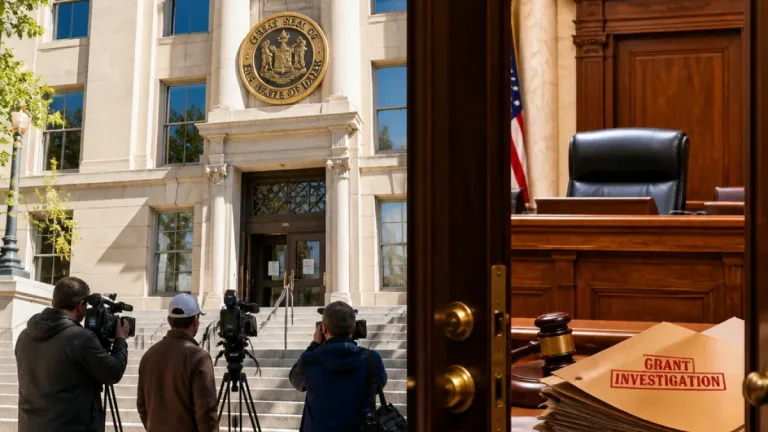
That tension intensified when federal agents executed a search warrant at Lucas’ Portsmouth district office and at a marijuana business she owns on May 6. Video and reporting at the scene showed a significant law enforcement presence — an episode Lucas described as politically motivated. Two days later, on May 8, the Virginia Supreme Court struck down the new congressional districts her redistricting plan had produced.
Lucas framed the raid as part of a broader backlash to her legislative activity. She also drew a contrast with national politics, saying President Donald Trump has sought to paint her as corrupt; she replied bluntly, "He is who he is. He has 34 felonies — I think he'd like to see me have 34 felonies. But guess what: I'm not a felon."
What the budget deal left unresolved
The compromise that preserved most incentives for data centers nevertheless left the issue alive for next year’s session. Lucas told POLITICO she remains "unmovable" on the policy changes she championed, suggesting the fight will resurface when lawmakers reconvene. That places Virginia among states wrestling with how to manage the rapid growth of energy‑intensive data facilities while protecting tax revenues and power grids.
- Budget outcome: Data centers kept state tax incentives; a smaller energy tax was added.
- Legal action: FBI search warrants executed May 6 at Lucas’ district office and a business she owns.
- Court ruling: Virginia Supreme Court struck down the new congressional districts on May 8.
| Date | Event |
|---|---|
| May 6 | FBI executed search warrants at Lucas' Portsmouth office and related business |
| May 8 | Virginia Supreme Court struck down the new congressional districts |
| Budget cycle (recent) | Data centers retained tax incentives; smaller energy tax imposed |
For Virginians watching at the local level, the immediate effect was political: budget negotiations that nearly collapsed and a public clash between the state’s legislative leader and its governor. For communities that host or court data centers, the stakes are concrete — future tax arrangements and energy surcharges could affect local revenue streams and utilities planning.
What comes next
Lucas indicated she wants to lower the temperature with Gov. Spanberger on other matters, but she also made it clear the policy fight over data centers is not settled. With lawmakers likely to revisit the topic next year, the debate will remain a test of how Virginia balances economic development with fiscal fairness and energy reliability.
The episode also highlights how individual lawmakers can shape statewide policy and how legal and political pressures can converge — particularly in a state that has become a national hub for the very industry at the center of the dispute.
As the commonwealth heads into another legislative session, Lucas’ stance signals that the battle lines over data centers — and over who sets the rules in Richmond — are unlikely to dissolve anytime soon.