Vodafone is testing a combination of software and radio hardware that can sharply reduce the power draw of 5G base stations while keeping service live, the company said, a move that could make mobile networks both greener and more resilient.
What Vodafone tested and why it matters
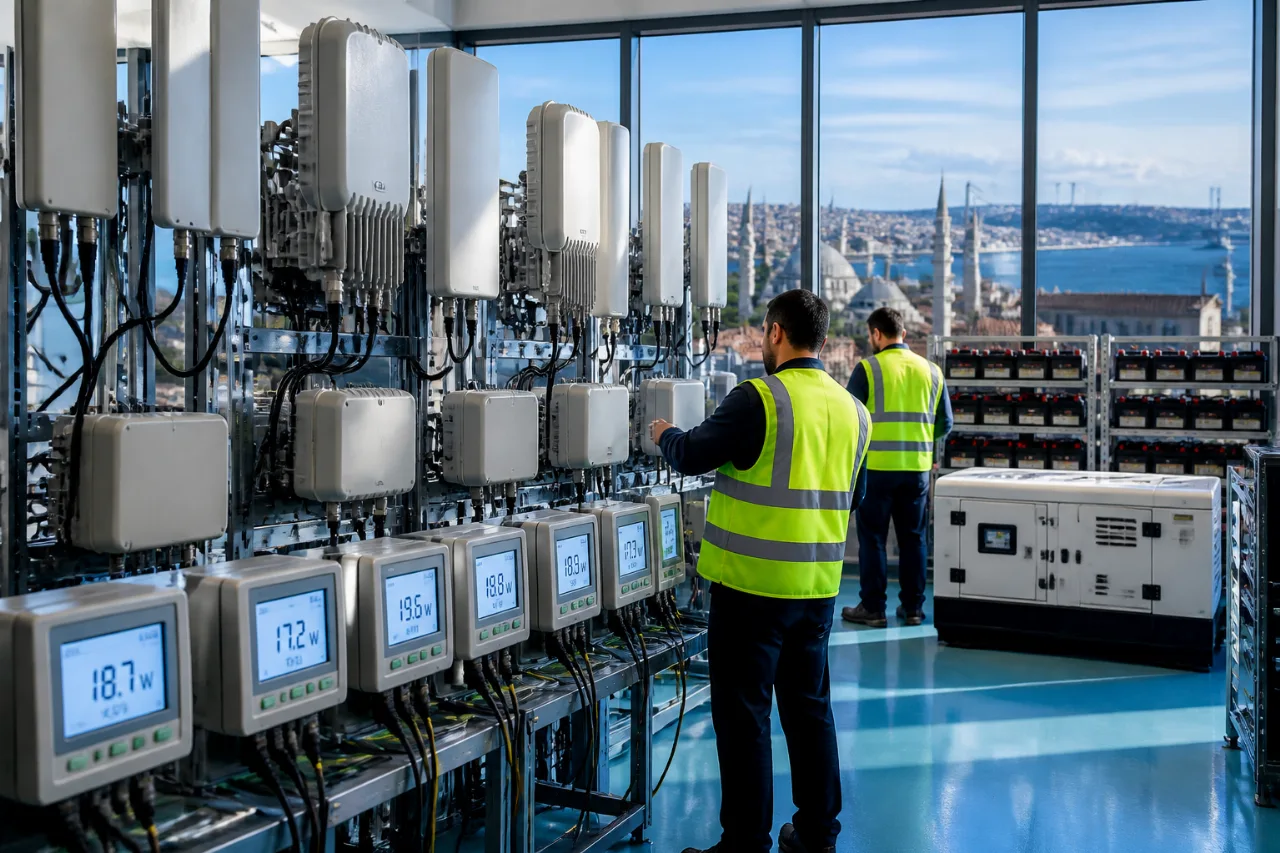
At a new multi‑vendor test center in Istanbul, Vodafone achieved roughly 10% energy savings using power‑management software and engineering tweaks, and an additional roughly 20% reduction when employing next‑generation radio hardware. The combined effect lets sites operate with markedly lower energy consumption during periods of light demand and return to full capacity quickly when traffic rises.
The trial is significant because mobile networks account for a meaningful portion of telecom operators’ energy use. Reducing radio power without degrading user experience can lower operating costs, cut carbon emissions and extend the time sites can run on backup power during electricity outages.
How the system works
The approach blends dynamic capacity scaling with new radio designs. In its most extreme low‑power state, a radio antenna can function on about 10 watts — similar to the draw of an LED light bulb — while continuing to deliver service on low‑ and mid‑band frequencies. When demand increases, the system restores capacity in stages, reactivating Massive MIMO radios that use the 3.5 GHz band to boost throughput in busy areas.
- Maximum energy‑saving mode: ~10 watts, returns to full capacity in ~30 seconds.
- Fast response mode: ~50 watts, returns to full performance in less than ~5 seconds.
- Combined benefit: Up to ~30% total energy reduction when software and next‑gen radios are used together.
The tests were run at Vodafone’s BESTT facility — the operator’s Benchmark Environment Site Testing in Türkiye — which emulates a live network to validate radio access network (RAN) software and hardware from multiple vendors. That multi‑vendor setup matters because real networks are heterogeneous; energy‑saving techniques must work across different equipment to be practical at scale.
Implications for resilience and sustainability
Lower idle power draw helps two things at once: it cuts routine energy consumption and it lets base stations run longer on generators or batteries during power cuts. That extension in backup runtime improves service continuity when the grid fails, which is increasingly important as extreme weather and other disruptions grow more common.
For operators, the technology also presents a capacity‑management tradeoff: conserve energy during lulls, but guarantee sub‑second or second‑level recovery when users demand higher throughput. Vodafone’s results — showing recovery in ~5 to ~30 seconds depending on mode — suggest the balance is achievable without noticeable harm to customers in many scenarios.
| Operating mode | Typical power draw | Wake time |
|---|---|---|
| Maximum energy saving | ~10 watts | ~30 seconds |
| Fast response | ~50 watts | <5 seconds |
Vodafone said it will continue refining the techniques at the BESTT center and assess how the methods translate to live networks and diverse markets. The next steps will determine how broadly such savings can be rolled out and what operational changes — from software coordination to vendor upgrades — are required for large‑scale deployment.
If adopted widely, energy‑aware RAN operation could become a core tool for operators aiming to meet sustainability pledges and to keep customers connected during grid instability, while also easing the cost pressure of rising energy prices.