Several national teams at the 2026 World Cup have seen abrupt changes in leadership, with a string of prominent coaches departing after heavy losses or brief tenures. The pattern — spanning Europe, Africa and Asia — underscores the intense scrutiny that managers face at football’s biggest stage and raises questions about how federations balance short-term results against longer-term planning.
Short tenures and decisive results
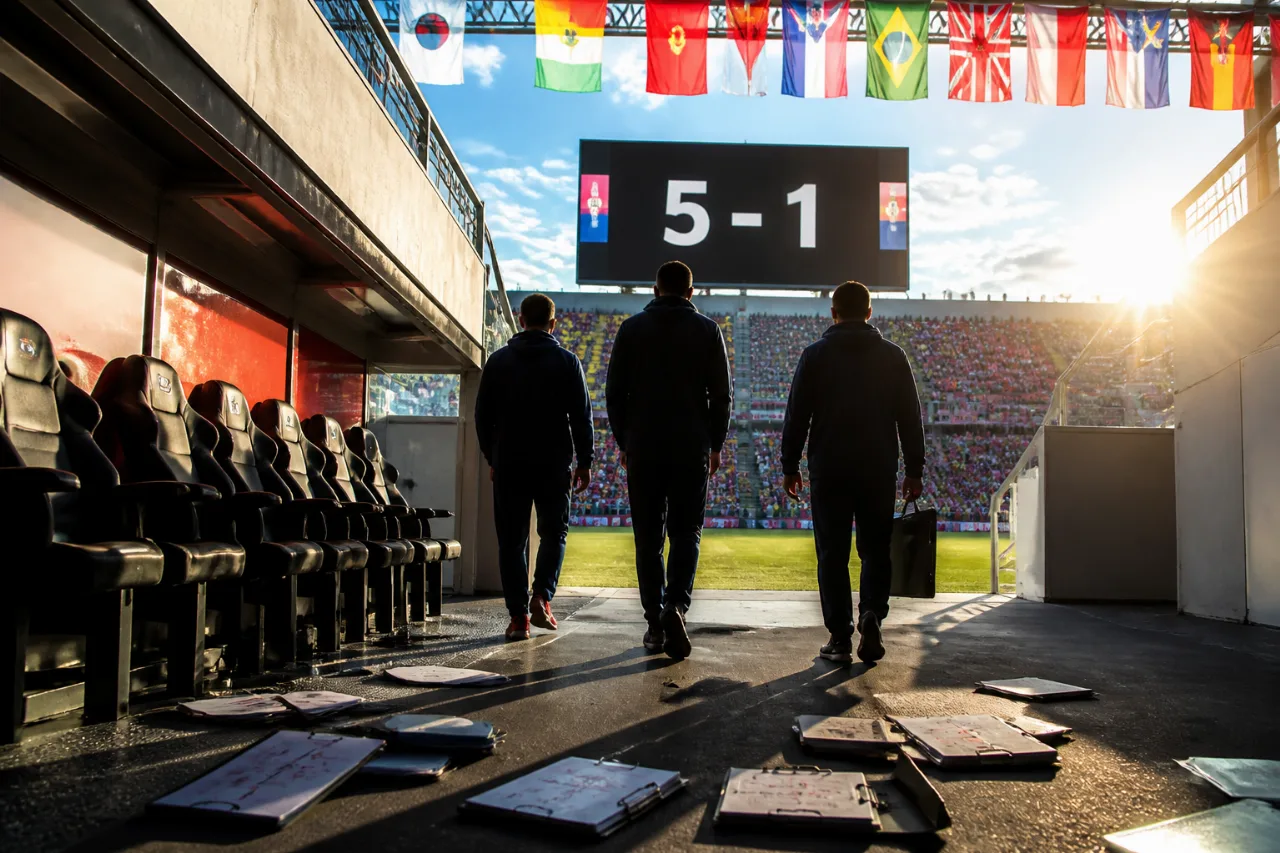
Among the departures was Tunisia’s coaching reshuffle. Sabri Lamouchi, who took charge on Jan. 14 following Tunisia’s elimination from the Africa Cup of Nations, was dismissed after a heavy 5-1 opening-group defeat to Sweden. The Tunisian federation described the separation as a mutual termination and extended well wishes for his future.
Lamouchi was replaced by Hervé Renard, appointed on June 16. Renard announced his resignation just 18 days into the role after Tunisia’s campaign produced a porous defensive display — the team conceded 12 goals during the group stage — leaving both coach and federation to reassess commitments after a brief experiment.
“It was an honour to wear Tunisia’s colours and to live this unforgettable experience.”
High-profile exits in Europe and Asia
Portugal’s long-serving manager Roberto Martínez, appointed on Jan. 9, 2023, to succeed Fernando Santos, also stepped down after Portugal’s last-16 elimination by Spain. Martínez framed his exit around the team’s unmet objective: winning the World Cup.
South Korea’s head coach Hong Myung-bo returned for a second spell on July 8, 2024, but resigned after a disappointing group phase in which the team lost to Mexico and South Africa and faced heavy domestic criticism. In a prepared statement he emphasized the weight of responsibility that comes with the role; the resignation prompted rebuke from the nation’s president, reflecting the political heat national football results can draw.
What this means for federations and fans
- Federations face immediate pressure to show decisive action after poor tournament results, often prioritizing optics and quick fixes over continuity.
- Managers operate under compressed timelines: brief spells that hinge on a handful of matches can determine career trajectories.
- Teams risk disruption mid-cycle; frequent changes in leadership complicate long-term development and squad cohesion ahead of future qualifying campaigns.
Snapshot of recent coaching changes
| Country | Coach | Appointment | Exit reason |
|---|---|---|---|
| Tunisia | Sabri Lamouchi | Jan. 14 | Sacked after 5-1 loss to Sweden |
| Tunisia | Hervé Renard | June 16 | Resigned after group-stage campaign |
| Portugal | Roberto Martínez | Jan. 9, 2023 | Left after last-16 elimination by Spain |
| South Korea | Hong Myung-bo | July 8, 2024 (return) | Resigned amid criticism after group-stage losses |
These exits illustrate the high stakes of World Cup management: a tournament measured in weeks can determine the fate of coaches whose plans often span years. Federations must weigh the short-term political and public pressures that follow poor results against the benefits of sustained leadership — a choice that will shape the months and years ahead for these national teams.