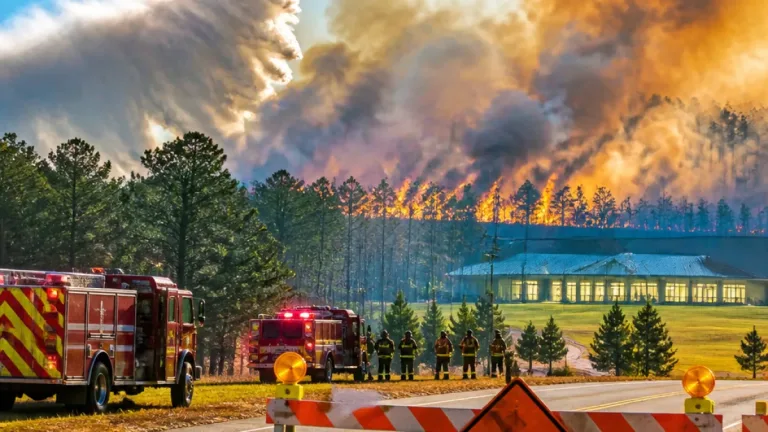

The Wisconsin Department of Natural Resources issued an advisory July 14 warning that wildfire smoke from fires in northern Minnesota and Ontario will move into northern Wisconsin Tuesday evening and push south through July 16, potentially covering the entire state.
The DNR said the advisory is set to end at noon July 16 but likely will be extended for some areas as forecasts and smoke transport patterns are updated.
What this means for residents
Air quality across Wisconsin could range from "unhealthy for sensitive groups" to "very unhealthy" this week, the agency said. When the Air Quality Index (AQI) reaches very unhealthy levels, health officials advise that everyone limit outdoor physical activity and that people with heart or lung conditions avoid outdoor exertion entirely.
- Smoke is traveling from active fires in Ontario and in northern Minnesota.
- The U.S. Forest Service has closed the Boundary Waters Canoe Area and evacuated campers because of the nearby Minnesota fires.
- Northern Minnesota fires are closer to Wisconsin than the Canadian fires that have affected the state in previous years, increasing the expected smoke impact.
"It's a pretty serious event that we're probably going to see here," said Craig Czarnecki, outreach coordinator for the DNR's Air Management program.
Health risks and precautions
The primary pollutant in wildfire smoke is fine particulate matter (PM2.5), which is linked to heart and lung problems. The DNR and health officials advise:
- Limit or avoid outdoor activities when air quality is poor.
- People with asthma, chronic obstructive pulmonary disease, heart disease, older adults and children should take extra precautions.
- A properly fitting N95 mask can reduce PM2.5 inhalation when worn correctly.
- If you develop new coughing or shortness of breath, move indoors and seek medical attention if symptoms persist.
| AQI category | Typical guidance |
|---|---|
| Unhealthy for Sensitive Groups | Limit prolonged outdoor exertion for sensitive people |
| Very Unhealthy | Everyone should limit outdoor activity; vulnerable people avoid outdoor exertion |
The advisory comes amid another heat wave that could produce "feels like" temperatures above 100 degrees across large portions of the state, the DNR said. Hot, dry and windy conditions have allowed fires in northern Minnesota to expand rapidly, increasing smoke production.
Officials will update the advisory as new data on smoke transport and air monitoring becomes available. Residents should monitor local forecasts, the Wisconsin DNR and local public health agencies for the latest information and protective actions.
— Wisconsin correspondent Brooke Steiner