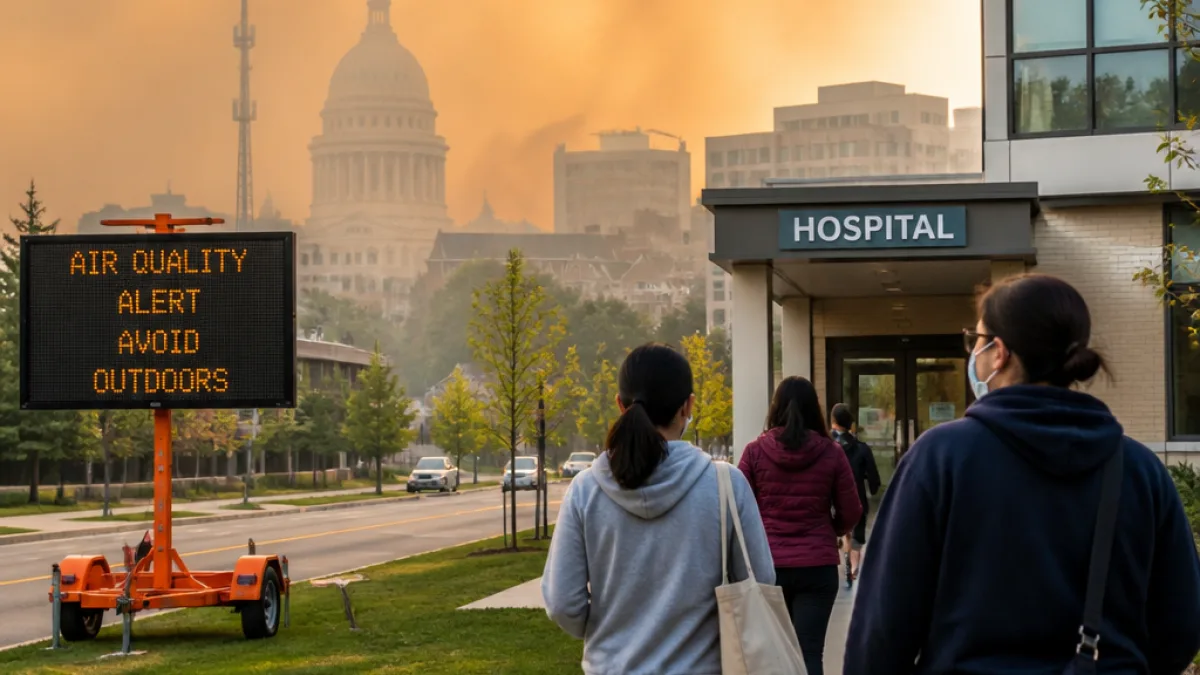
Madison residents should limit outdoor activity as smoke from wildfires in northern Minnesota and parts of Canada has driven local air quality into hazardous ranges, officials and physicians said Thursday.
What changed for residents
The Wisconsin Department of Natural Resources issued a statewide air quality alert after particulate-laden smoke drifted south into southern Wisconsin. City officials and medical providers advised people — particularly those with respiratory or cardiac conditions — to avoid prolonged outdoor exertion until conditions improve.
Dr. Mark Moss, an allergist with UW Health, said the small particles in wildfire smoke — known as PM2.5 — can cause wheezing, coughing and shortness of breath and may prompt more people to seek urgent care or emergency treatment.
“It can make breathing very difficult and cause symptoms of wheezing and coughing and shortness of breath,”
Moss said his clinic is anticipating increased patient calls and visits while the air quality remains very unhealthy. He also noted that these events have become more frequent in recent years, and that Madison has experienced several multi-day poor air episodes in the past four years.
How to protect yourself
- Limit outdoor time and avoid strenuous activity.
- People with asthma, COPD, heart disease, children and older adults should take extra precautions.
- Paper masks are not effective against fine particulates; seek guidance from health providers about appropriate respiratory protection.
The city installed new air quality monitors in 2024 to better track neighborhood differences in routine conditions, but officials note those devices are not designed specifically for measuring major wildfire-smoke events, even though they will register the elevated levels.
| Item | Local guidance |
|---|---|
| Who is at risk | People with asthma, COPD, heart disease, young children, older adults |
| Recommended action | Stay indoors, reduce physical exertion, consult providers if symptoms worsen |
| Masks | Paper masks offer limited protection against PM2.5 |
Health systems and urgent care centers may see increased patient volume as residents with breathing difficulties seek care. Madison clinicians urge residents to have medications on hand, follow existing asthma or COPD action plans, and contact their medical provider if they experience new or worsening symptoms.
Officials will continue to monitor conditions and share updates as air quality changes. For current air quality readings and guidance, residents should consult the Wisconsin Department of Natural Resources and local public health advisories.