The knockout phase of the 2026 FIFA World Cup tightened Thursday when France beat Morocco, leaving just seven teams vying for the trophy as the tournament moves into the quarterfinals. With U.S. cities hosting several high-stakes fixtures and the final scheduled for East Rutherford, the next three rounds will determine which sides remain in contention for soccer’s top prize.
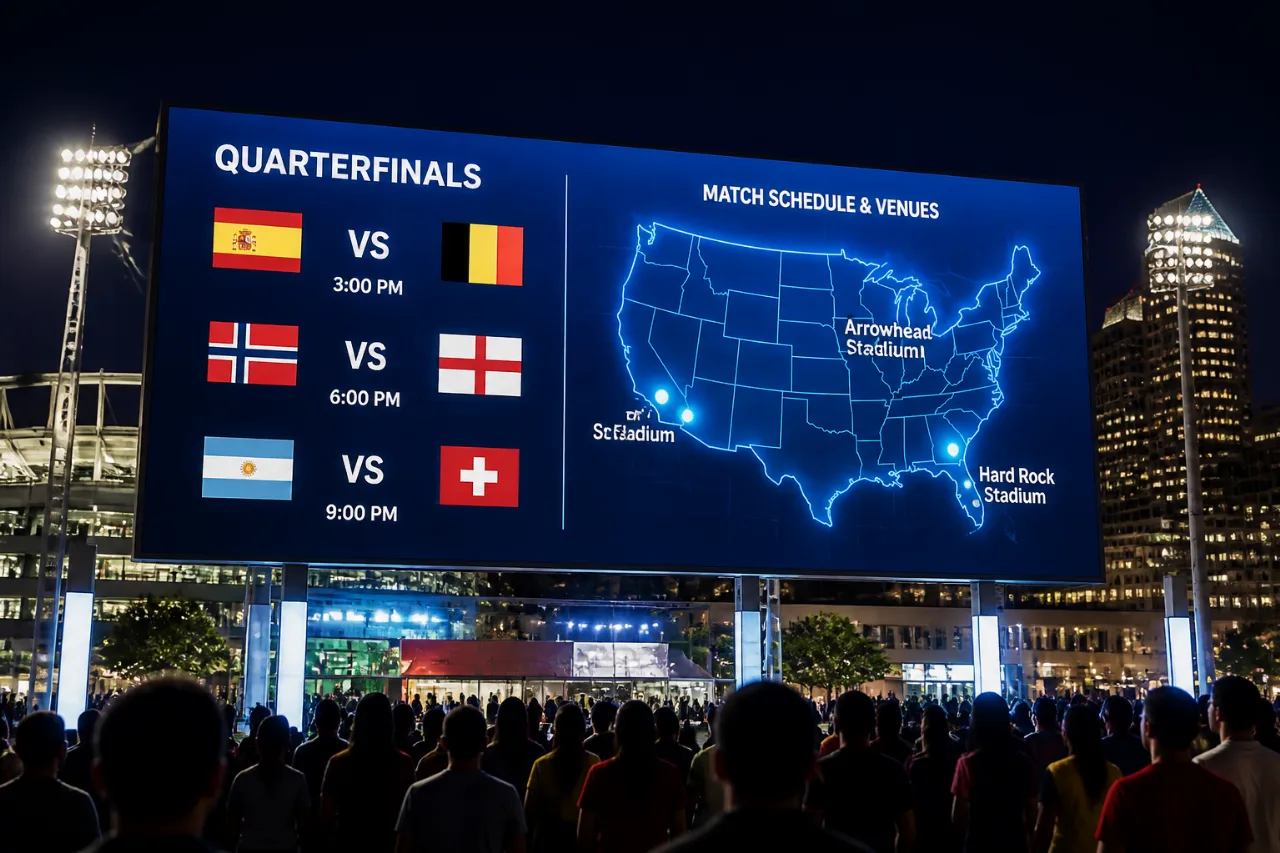
Quarterfinal matchups and schedule
France’s victory sends the reigning two-time world champions forward and sets their next opponent as the winner of Spain vs. Belgium. Quarterfinal matches are set across major U.S. venues, giving American fans multiple opportunities to see elite teams in person.
| Date | Match | Kickoff (ET) | Venue |
|---|---|---|---|
| Friday, July 10 | Spain vs. Belgium | 3 p.m. | SoFi Stadium, Inglewood, California |
| Saturday, July 11 | Norway vs. England | 5 p.m. | Hard Rock Stadium, Miami Gardens, Florida |
| Saturday, July 11 | Argentina vs. Switzerland | 9 p.m. | Arrowhead Stadium, Kansas City, Missouri |
Semifinal dates are set for July 14 and July 15, leading to a third-place game on July 18 and the final on July 19 at MetLife Stadium in East Rutherford, New Jersey.
Who remains and how they got here
The field has been reduced from the expanded 48-team start to the following quarterfinal participants (with recent knockout results that produced this bracket):
- France — advanced with a win over Morocco
- Spain — advanced past Portugal in earlier rounds
- Belgium — blanked the United States 4-1 to advance
- Norway — beat Brazil in the Round of 16
- England — defeated Mexico in knockout play
- Argentina — progressed after a 3-2 victory over Egypt
- Switzerland — moved on following a penalty shootout win over Colombia
“France 2, Morocco 0”
That result on Thursday not only eliminated Morocco but also finalized which teams will contest the remaining knockout rounds. From here, contenders need three consecutive wins to claim the World Cup.
Why this matters to U.S. audiences
Unlike past tournaments, the 2026 World Cup is staged across North America, with several quarterfinal and semifinal matches taking place in U.S. stadiums. American viewers who followed the U.S. team’s run will still have multiple marquee matches to watch live and in person as the tournament heads into its decisive phase.
Television schedules, travel plans for fans and ticket demand are all likely to be affected by which teams advance. The bracket also shapes the commercial and diplomatic visibility of nations on a global stage at a moment when international sporting events attract intense media and political attention.
With just three wins separating the remaining sides from lifting the trophy, the next week will test depth, tactics and stamina — and will produce matchups that could define careers and national football histories.