
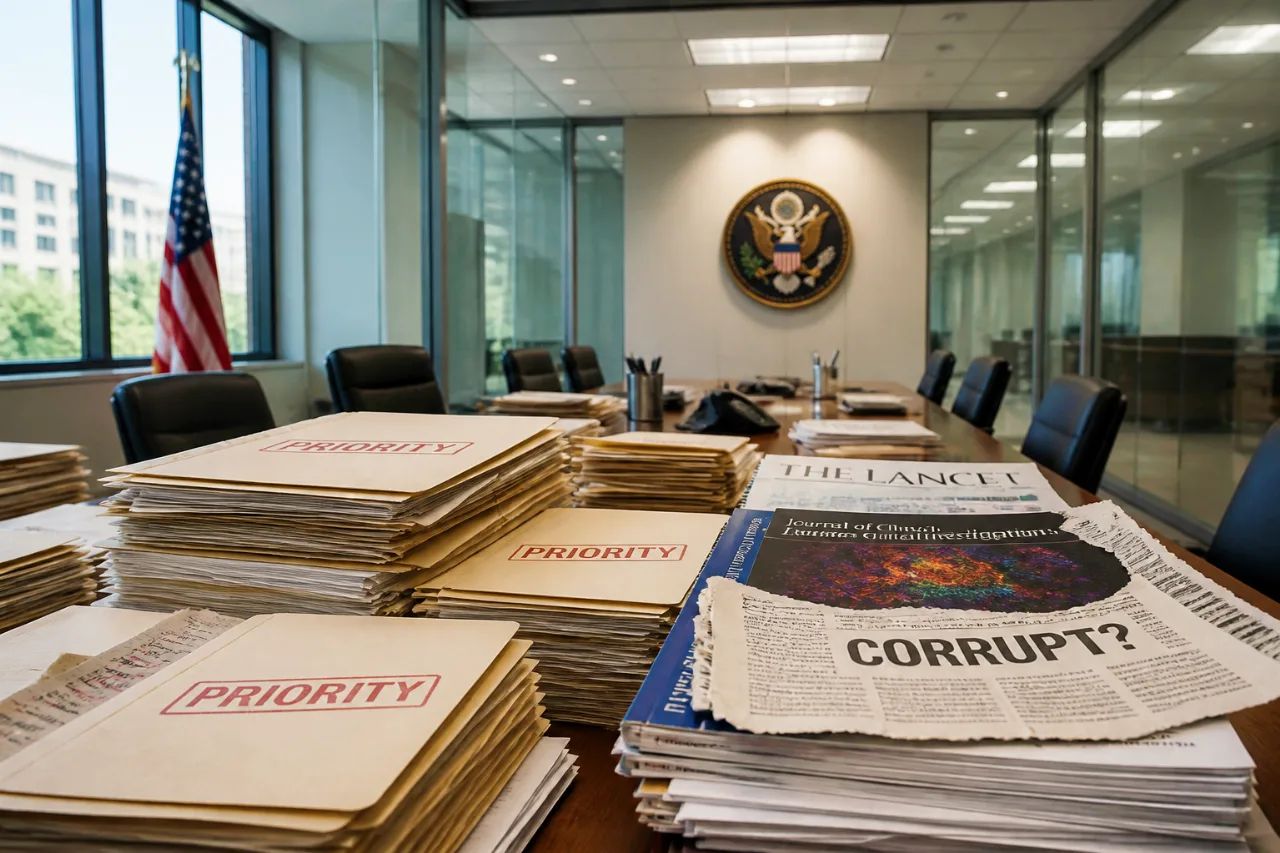
The federal government is proposing changes that would give political appointees greater authority over distribution of federal science and health research grants, according to reporting by KQED. At the same time, Health and Human Services Secretary Robert F. Kennedy Jr. has intensified a public campaign against medical journals, calling them "corrupt" and threatening legal action.
What’s changing in research funding
KQED reports that the administration is moving to centralize decision-making so political appointees could have increased influence over who receives federal grants for scientific and health research. The stated aim is to align grant awards more closely with the president’s policy priorities, an approach that critics say risks politicizing peer-reviewed science.
- Shift in authority: political appointees would play a larger role in grant approvals.
- Policy alignment: funding decisions would be evaluated for consistency with administration priorities.
- Concerns: potential for reduced independence of peer-reviewed research and constrained academic freedom.
HHS secretary escalates clash with journals
Also highlighted in the KQED piece is Secretary Kennedy’s public confrontation with medical journals. He has used sharp language to describe those publications and has threatened to pursue legal measures against them. The reporting quotes Kennedy referring to journals as:
"corrupt"
Such rhetoric intensifies an ongoing debate about transparency, publication bias and the role of journals in vetting and disseminating medical findings. It also raises questions about how federal health agencies will interact with scientific publishers and the broader research community going forward.
Broader context and immediate consequences
Experts and observers who track federal research policy have warned that increasing political control over grant distribution can alter research agendas, deter scientists from pursuing politically sensitive lines of inquiry and complicate long-term projects that rely on stable, peer-reviewed funding cycles. The KQED report situates recent moves within a pattern of executive-level efforts to ensure federal programs reflect policy goals, but with particular friction in the realms of health and science.
| Actor | Reported action |
|---|---|
| Administration | Proposing greater role for political appointees in grant awards |
| HHS Secretary Robert F. Kennedy Jr. | Publicly labeled medical journals "corrupt" and threatened prosecution |
For researchers and institutions that depend on federal grants, the changes could alter competitive dynamics and priorities for years to come. For clinicians and the public, heightened contention between a cabinet secretary and scientific publishers risks undermining confidence in the processes that validate medical evidence.
As the administration advances these proposals, stakeholders in universities, scientific societies and publishing will be watching for specific regulatory or procedural changes that would implement the shift in authority and for any formal actions that HHS might take against journals. The tensions reflected in the reporting underscore persistent questions about how best to balance democratic accountability with the scientific community’s need for independent, peer-reviewed funding and dissemination systems.