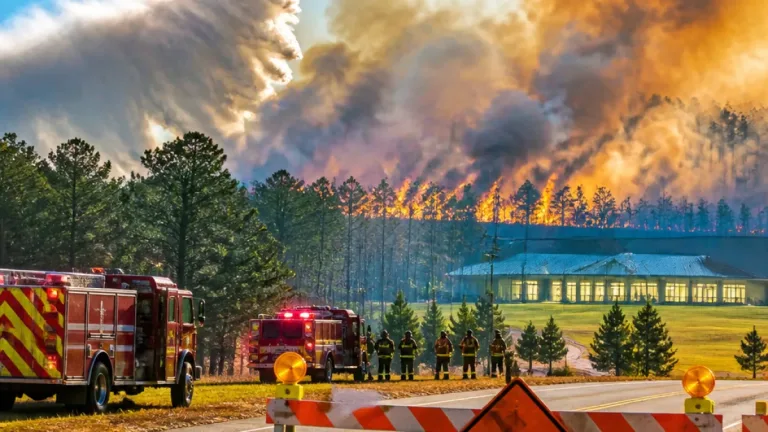

Dense smoke from Canadian wildfires settled over Chicago and the northern suburbs Thursday, driving air-quality readings far past the Environmental Protection Agency’s hazardous threshold and prompting park districts and municipalities to close outdoor facilities, move summer camps indoors or cancel activities.
Air quality readings topped the index
Air quality index (AQI) values climbed into the ‘‘hazardous’’ range — a level the scale marks at 301 and above — with some readings reported so high they exceeded typical map ranges. As of 11:45 a.m., Lake Forest registered an AQI of 565, while Waukegan and locations across the Wisconsin border recorded values reported as above 600.
"When the number gets above 300, everyone is impacted no matter what," said a meteorologist monitoring the regional readings, noting the conditions as very poor across far northern counties.
Park districts and local governments in northern Cook and Lake counties issued notices warning parents and residents that public beaches, outdoor pools and other open-air facilities were closed or that programs would be moved indoors. Chicago Park District camps and activities were similarly shifted inside or canceled altogether for the safety of participants.
Health risks and vulnerable groups
Health experts emphasized that the smoke and accompanying pollutants pose the greatest danger to young children, older adults and people with preexisting respiratory conditions. An allergist and immunologist with the American Lung Association warned that the youngest children are particularly vulnerable because their lungs and airways are still developing.
"The most vulnerable population to these pollutants are going to be little kids less than five years of age because they have immature airways," said Dr. Juanita Mora, naming older adults as another high-risk group.
Local officials also issued advisories for residents to limit outdoor exertion, although specific instructions and deeper health guidance were issued through park district and municipal channels.
Closures and changes across the region
Responses to the hazardous readings included:
- Closures of beaches and outdoor pools in Chicago’s northern suburbs.
- Park district day camps moved indoors or canceled activities.
- Municipal advisories urging caution for children, seniors and anyone with respiratory issues.
In Waukegan, the mayor issued a public advisory for residents, particularly those at higher risk, to take precautions as the smoke reduced air quality across the area.
| Location | Reported AQI (approx.) |
|---|---|
| Lake Forest | 565 |
| Waukegan / northern WI border | >600 |
| Hazardous threshold | 301 |
Chicago residents should check updates from the Chicago Park District, local village or city websites and the Illinois Environmental Protection Agency for evolving air-quality information and guidance. For families with young children and older adults, officials recommend staying indoors with windows closed and limiting physical activity until levels improve.
This event follows a pattern of smoke transport from ongoing Canadian wildfires, which has periodically pushed AQI values into unhealthy and hazardous ranges across the Upper Midwest. Public officials and health experts continue to monitor conditions and adjust programming and public-safety recommendations accordingly.