Illinois has enacted a new law designed to give unaccompanied immigrant children a state-level pathway to pursue federal protections after lawmakers and advocates said many young people were unable to start critical immigration proceedings while held in federal custody.
What the law does
Known as Ashley’s Law, the measure took effect in June and was the first bill Gov. J.B. Pritzker signed that month. It was drafted after lawmakers and immigrant advocates identified cases in which minors who otherwise qualified for federal relief could not practically pursue it while detained by the federal government.
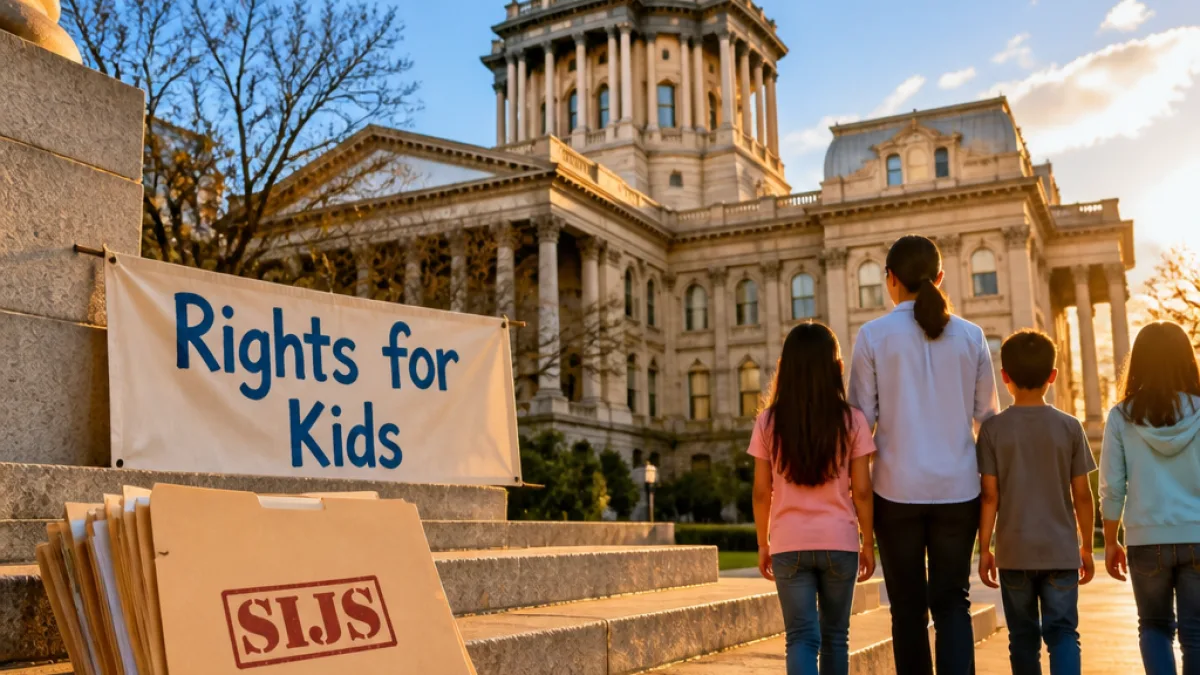
The legislation is aimed at children who may be eligible for Special Immigrant Juvenile Status (SIJS) — a federal protection available to certain young people who have been abused, neglected or abandoned. Advocates say the new law creates a state-level mechanism to ensure those children can access attorneys, documentation and legal filings that lead to SIJS petitions.
Why advocates say the law was needed
Immigration attorneys and child welfare groups testified that changes in federal practice have slowed the placement of unaccompanied minors with sponsors and prolonged stays in Office of Refugee Resettlement (ORR) custody.
"Things have changed dramatically for the past year," said Michael Hoyt, managing attorney for the Immigrant Children's Protection Project at the National Immigrant Justice Center.
Hoyt and other advocates described delays in the family reunification and sponsorship process that previously allowed children to be released more quickly to vetted sponsors. Those delays, they say, have limited children's ability to access immigration relief that depends on state juvenile court findings and other documentation.
Data illustrating longer stays in federal custody
National data cited by advocates shows an increase in the average number of days children spend in federal custody:
| Year | Average days in federal custody |
|---|---|
| 2024 | 30 |
| 2025 | 117 |
| 2026 | Higher still (ongoing) |
A Department of Homeland Security spokesperson told NBC 5 Investigates the department is concerned about "unvetted" sponsors and potential criminal activity, which officials have cited as a reason for increased scrutiny before releasing children from federal custody.
Local partners and procedural changes
The state worked with nonprofit advocates including the National Immigrant Justice Center to draft the legislation. Supporters say the bill will allow attorneys and child welfare workers in Illinois to move more quickly to gather court findings and petitions needed for SIJS when children are eligible.
- Who benefits: Unaccompanied minors who may qualify for SIJS because of abuse, neglect or abandonment.
- When it took effect: June (the law was the governor's first signing that month).
- Main partners: National Immigrant Justice Center and state lawmakers in Springfield.
Advocates stress the new law does not replace federal vetting or custody decisions but provides a state-level tool to help children access federal protections they may be entitled to.
Questions remain about how the policy will unfold in practice: how quickly children in federal custody will be identified and connected with Illinois-based legal services, and how state and federal agencies will coordinate. Immigrant-rights attorneys say timely access to counsel and court processes can be decisive for young people pursuing SIJS.
The passage of Ashley’s Law places Illinois among states seeking local remedies to aid vulnerable children amid shifting federal immigration enforcement and placement practices.