Colorado tribal leaders and congressional representatives joined conservation groups on Wednesday in sharply criticizing President Donald Trump’s executive orders that dramatically shrink two national monuments in southern Utah.
What changed
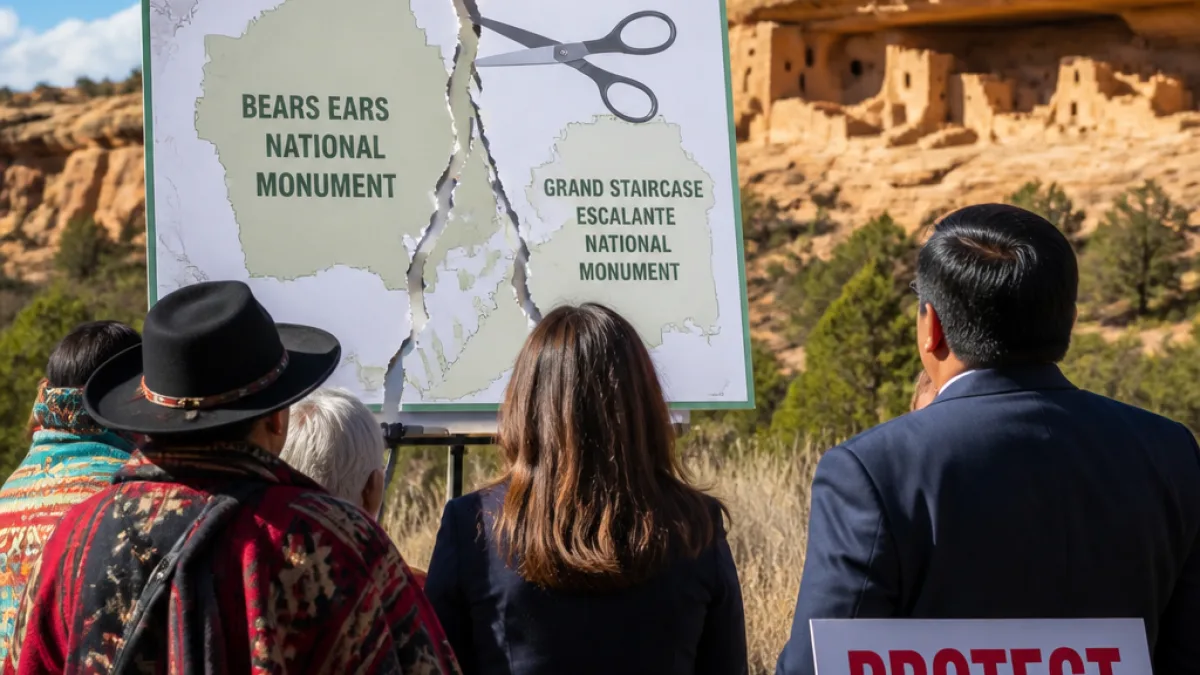
On Tuesday, July 14, the White House announced orders that cut the combined size of Bears Ears and Grand Staircase‑Escalante national monuments from about 3.2 million acres to under 303,000 acres — a reduction of roughly 90%. The monuments are known for sandstone canyons, mesas, buttes and thousands of archaeological sites including petroglyphs and cliff dwellings.
| Monument | Approx. area before | Approx. area after |
|---|---|---|
| Bears Ears | Part of combined 3.2 million acres | Portion of the reduced 303,000 acres |
| Grand Staircase‑Escalante | Part of combined 3.2 million acres | Portion of the reduced 303,000 acres |
Colorado voices react
Tribal leaders with ties to Colorado criticized the orders for their cultural and historical implications. Gwen Cantsee, vice chairwoman of the Ute Mountain Ute Tribe and a member of the Bears Ears Commission, said the decision was deeply disappointing and emphasized the tribe’s longstanding connection to the land.
“The Bears Ears region is our homeland,” Cantsee said. “Our ancestors lived, hunted, gathered and prayed here long before boundaries were drawn. The Ute Mountain Ute people were forcefully removed from these lands, but our connection to this sacred place cannot be erased.”
The executive order that reduced Bears Ears also abolished the Bears Ears Commission, a tribal advisory group that had provided input on management of the monument.
Colorado’s congressional delegation also weighed in. Rep. Joe Neguse, who represents mountain communities, Boulder and Fort Collins, said the decision will reverberate with his constituents — a reference to longstanding concerns among Democrats, tribes and conservationists about protections for cultural sites and public lands.
Federal and local arguments
At the signing event, President Trump and Utah Republican officials framed the changes as restoring fairness for Utah residents and enabling natural-resource development. The administration and state leaders have argued monument boundaries were too expansive and constrained oil and uranium extraction and other uses.
- Supporters say the reductions reopen land for state control and resource development.
- Opponents warn the cuts threaten archaeological sites, sacred tribal areas and recreation economies.
- Tribal input is now limited by the abolition of the Bears Ears Commission.
The orders set up a likely legal and political battle over the future of the affected lands. For Colorado communities with cultural, familial or recreational ties to Bears Ears and Grand Staircase‑Escalante, the decision raises questions about stewardship and access to sites long regarded as sacred and scientifically valuable.
As the litigation and policy debate unfold, tribal leaders and Democratic lawmakers from Colorado and elsewhere plan to continue voicing opposition and seeking avenues to protect cultural resources and public-land management practices.
— Ethan Maxwell, Colorado correspondent