Trees as infrastructure as heat grips Denver
Denver is bracing for a heat dome that meteorologists warn could persist through next weekend, and local groups say the city’s patchwork tree cover will shape who suffers most. A Denver nonprofit, The Park People, is targeting neighborhoods where canopy cover is lowest to help blunt rising temperatures and the public-health risks they bring.
Executive director Kim Yuan-Farrell described a stark disparity in urban shade across the city. Some neighborhoods enjoy canopy cover in the 20 to 30 percent range, while others fall to single digits. On the west side, Valverde has about 9 percent canopy cover, leaving residents with little shade as temperatures climb near triple digits.
- Neighborhoods identified as needing more tree cover: Westwood, Globeville, Northeast Park Hill and 25 others.
- Estimated cooling effect from trees: 15–20 degrees in shaded areas, according to the nonprofit’s reporting.
- Heat dome duration: warned by the National Weather Service to likely continue through next weekend.
"We really consider it a really essential element of green infrastructure, a real nature-based solution to a lot of these really serious local environmental problems," Kim Yuan-Farrell said.
The National Weather Service emphasized the intensity and persistence of the event. NWS meteorologist Russell Danielson warned the unusual aspect of this heat wave is how long it will last, and noted that available tree shade can materially cool public spaces.
Where the need is greatest
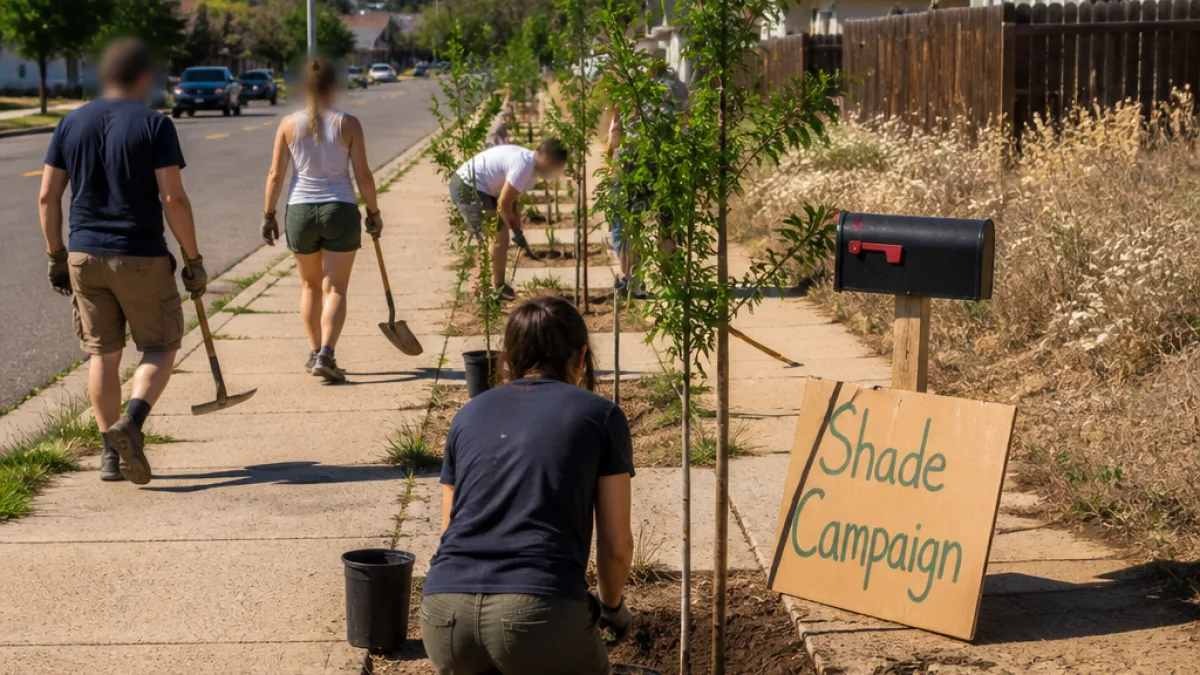
The Park People has mapped canopy coverage across Denver and singled out 28 neighborhoods with the most urgent needs. Planting efforts are focused on communities with the lowest percentages of tree cover, where residents face higher daytime temperatures, greater energy costs and increased health risks during extreme heat.
| Neighborhood | Reported canopy cover |
|---|---|
| Valverde | ~9% |
| Some city neighborhoods (example range) | 20–30% |
| Lower-coverage neighborhoods (example range) | 4–8% |
City planners and community groups increasingly view trees as part of essential urban infrastructure — not merely aesthetic additions. Shade reduces surface and air temperatures, lessens heat stress on residents, and can lower cooling costs for homes and businesses. For neighborhoods with very low canopy cover, planting programs can be a practical, long-term adaptation strategy.
Immediate and longer-term implications
For the current heat dome, the presence or absence of mature trees can determine where people seek relief. The Park People is working with residents and partners to accelerate planting where possible, but tree growth takes time. In the short term, residents in understory-poor areas will rely on cooling centers, libraries and rec centers to escape the worst heat.
Longer term, closing the shade gap will require sustained investment and collaboration across city agencies, nonprofits and neighborhood groups. That includes planting, long-term maintenance funding and ensuring new trees survive to maturity in neighborhoods that need them most.
The heat dome and the shade-gap discussion highlight a basic planning question for Denver: who gets cooled when temperatures spike? As the city faces more frequent extreme-heat events, where shade exists will matter as much as where it does not.