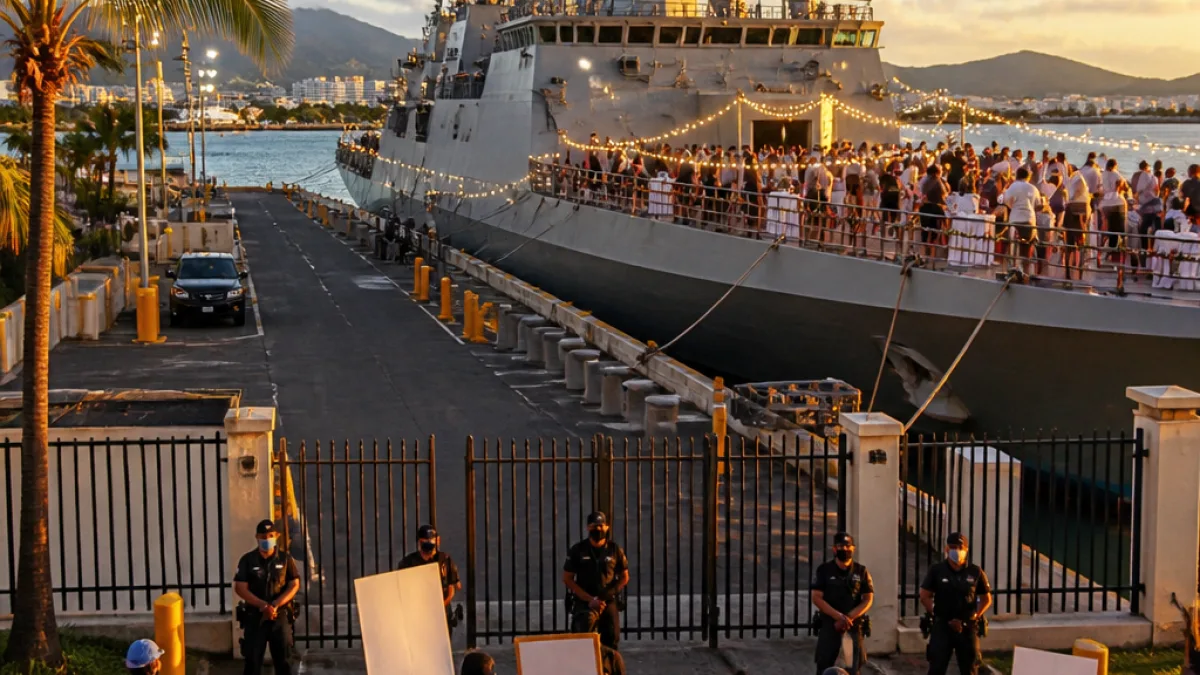
A reception aboard the Philippine navy ship BRP Miguel Malvar Wednesday night brought together prominent members of Honolulu’s Filipino community with military personnel and foreign diplomats before the vessel departed to join the biennial Rim of the Pacific exercise.
Hospitality afloat, dissent ashore
Guests mingled on the ship’s deck in Pearl Harbor for a Filipino Community Night event that naval leaders said underscored ties between the Philippines and the United States.
“This warm atmosphere, the smiles, enthusiastic conversations truly echo the spirit of Filipino hospitality, or bayanihan … central to Filipino psychology, which means we see ourselves in others,”
said Vice Adm. Jose Ezpeleta, the top officer of the Philippine navy, as he addressed attendees. He added that those community ties serve as a bridge linking the two countries beyond defense and security.
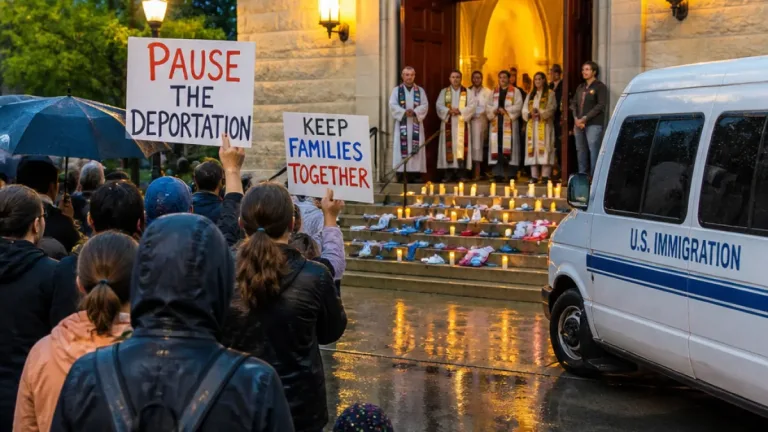
Outside the base, however, roughly 20 protesters gathered along Kamehameha Highway carrying signs and chanting slogans critical of the Philippine military’s participation in RIMPAC. Part of the group moved to the Halawa Gate area of the base and remained there until asked by base security to step back to the roadway.
Who participated in the protest
- Ho‘opae Pono Peace Project
- Anakbayan Hawaii
- Democratic Socialists of Oahu
- Hawaii Coalition for Human Rights in the Philippines
- Party for Socialism and Liberation
- Social Medicine Hawaii
- Filipino Artist Movement
Silayan Camson, a member of the Filipino Artist Movement, said demonstrators were motivated by personal connections to people affected by U.S. military activity worldwide and raised concerns about environmental impacts and military deployments across regions including the Asia-Pacific and the Middle East.
Local stakes and context
Pearl Harbor continues to host international naval activity during RIMPAC, the Pacific’s largest multinational maritime exercise held every two years. Events like the reception aboard BRP Miguel Malvar reflect long-standing people-to-people ties between the Filipino community in Hawaii and official military relationships.
| Inside the ship | Outside the base |
|---|---|
| Diplomats, military personnel, Filipino community leaders | About 20 protesters with signs and chants |
Organizers of the protest framed their action as solidarity with communities they say have been harmed by militarism and pollution tied to U.S. defense activities. Base officials intervened when protesters approached the gate, asking them to remain on public roadways.
The juxtaposition of a diplomatic reception and a public demonstration highlights the competing perspectives in Hawaii about foreign military presence and multinational exercises. For Honolulu and the state, such events illustrate the ongoing balancing act between hosting allied operations and responding to community concerns about their social and environmental impacts.
Reporting from Honolulu.