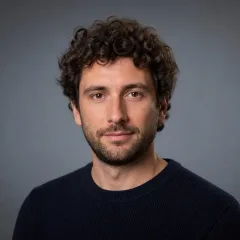

L7 Informatics announced that Ray Veeraraghavan, Ph.D. has joined the company as vice president of science and AI, a role in which he will oversee scientific content strategy, promote adoption of the company's L7|SYNAPSE™ agentic AI and advise senior leadership at strategic enterprise accounts. He reports to CEO Vasu Rangadass, Ph.D..
Bringing AI from research to regulated practice
Veeraraghavan arrives with more than 24 years of experience deploying AI and machine learning in regulated life-sciences environments. At Quest Diagnostics he led applied AI and data science for a molecular diagnostics portfolio the company valued at more than $2.5 billion, and he managed the enterprise evaluation that selected L7's L7|ESP platform.
Earlier in his career at Rady Children's Institute for Genomic Medicine, he architected the AI system supporting what the institute described as the world's first AI-enabled rapid whole-genome sequencing clinical workflow. That program was recognized with a Guinness World Record, received a Bio-IT World Best Practices award and was included in a flagship publication in Nature.
What he will do at L7
- Develop standardized, reusable scientific content and workflows to speed customer implementations.
- Drive practical deployment of agentic AI inside validated, traceable workflows required by regulated science.
- Advise senior teams at L7's most strategic enterprise accounts on scientific and AI strategy.
The company framed Veeraraghavan's role as part of a larger ambition to position L7|ESP as an enterprise "substrate" that unifies an organization’s physical operations rather than functioning merely as an additional point solution bolted onto a fragmented digital environment.
"Ray has spent his career turning frontier AI into production-grade systems that scientists and clinicians actually trust,"
The quote was attributed to CEO Vasu Rangadass, reflecting L7's emphasis on operationalizing AI in contexts where traceability, validation and regulatory compliance are central.
Context and implications
The hire illustrates a broader trend in life sciences: companies are recruiting executives who combine deep domain knowledge with practical experience deploying AI at scale in regulated clinical and diagnostic settings. L7’s stated focus is enabling customers to run agentic AI within the controls and auditability demanded by clinical workflows — a key challenge as AI tools move from experiments to routine use in patient-facing and regulated environments.
For enterprise customers, the combination of a platform (L7|ESP) and curated scientific content and validated workflows could shorten timelines for adoption, but it also raises familiar questions about governance, oversight and the robustness of validation processes when AI is granted more autonomous roles inside operational pipelines. L7’s strategy, as described in the announcement, is to address those concerns by building reusable, traceable workflow components that meet regulatory requirements.
| Experience | Notable achievements |
|---|---|
| Quest Diagnostics | Led AI for a molecular diagnostics portfolio > $2.5 billion; led evaluation selecting L7|ESP |
| Rady Children's Institute for Genomic Medicine | Architected AI-enabled rapid whole-genome sequencing workflow; Guinness World Record; Bio-IT World award; Nature publication |
L7's announcement places the hire at the intersection of product strategy and customer enablement: Veeraraghavan will both shape the company’s scientific offerings and assist clients in implementing them under the compliance constraints that govern clinical and diagnostic operations.
The move is likely to be watched by other companies and institutions navigating the transition from experimental AI systems to validated, operational tools in health care and life sciences, where the margin for error is small and the demand for traceability is high.