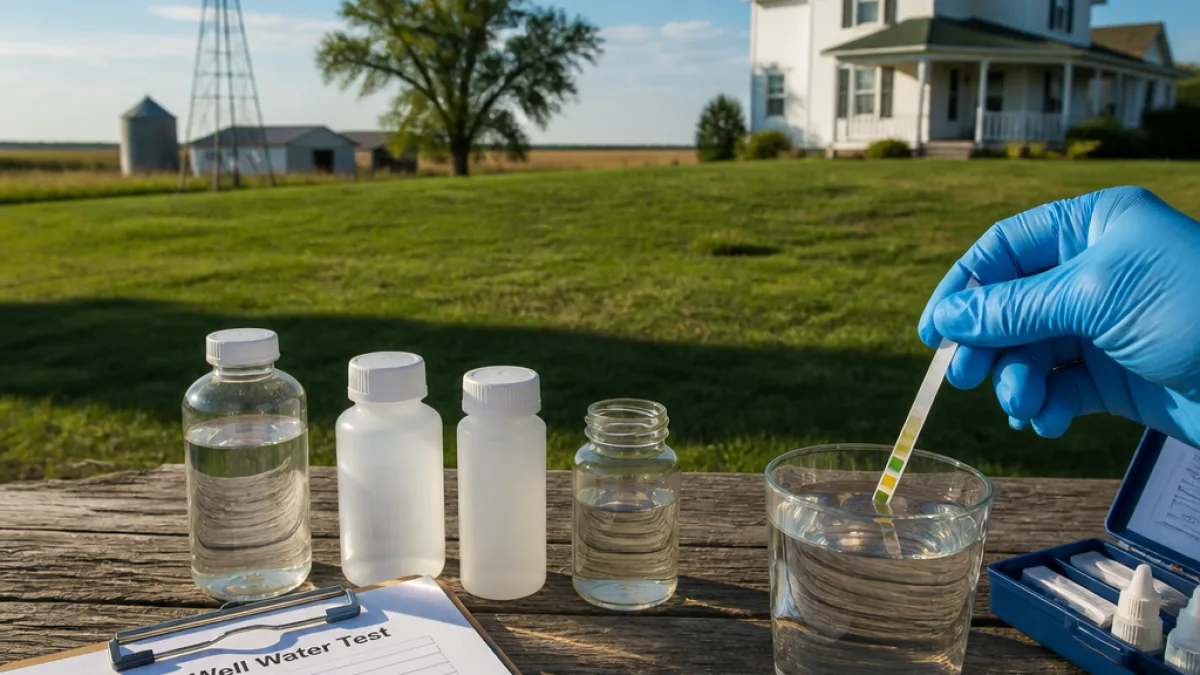
Nebraska homeowners who get drinking water from private wells should have their water tested at least once a year and any time conditions change, Nebraska Extension officials say.
The agency warns that private wells do not fall under the federal Safe Drinking Water Act, so they are not routinely monitored by state or federal authorities. That responsibility rests with the well owner.
What residents should test for
Extension educators recommend annual screening for two basic risks: nitrate and coliform bacteria (including E. coli). Those tests identify common contaminants tied to agricultural runoff, septic systems and other sources that can affect health.
“Clear water that tastes good shouldn’t automatically be considered safe,” Nebraska Extension says.
Beyond those baseline checks, Extension suggests additional testing when geography or household conditions raise the possibility of naturally occurring or plumbing-related contaminants. Recommended extras include:
- Arsenic, uranium, manganese and selenium — found naturally in parts of Nebraska.
- Lead — which can leach from household pipes and fixtures.
- Optional checks for hardness, iron, sulfur and copper to diagnose aesthetic problems like staining or unpleasant tastes and odors.
When to test besides the annual check
Extension advises testing after events that could compromise a well or its water quality, including:
- Flooding or heavy rains
- Wildfires
- Any repairs or changes to the well or household plumbing
- Before infants, pregnant people, older adults or someone with a weakened immune system begins using the water
Owners should also visually inspect the wellhead for damage, clear vegetation around the site to reduce root and fire risks, and make sure the ground slopes away from the well so surface water drains rather than pooling near it.
Treatment and next steps
If testing detects contaminants that present health risks, Extension recommends installing treatment systems designed to address the specific substances and concentrations found. For some contaminants, common treatment options include reverse osmosis, ion-exchange systems or specialized filtration. Homeowners should select systems based on laboratory results and manufacturer specifications.
| Test | Why it matters |
|---|---|
| Nitrate | High levels can be dangerous for infants and pregnant people |
| Coliform bacteria / E. coli | Indicates contamination from surface or septic sources |
| Arsenic, uranium | Occur naturally in some aquifers; long-term health risks |
| Lead | Can enter via household plumbing; harmful to children |
Nebraska Extension provides testing guidance and can help homeowners interpret results and plan remediation. Private-well households across the state are encouraged to contact local Extension offices for testing resources and laboratory recommendations.
Regular testing and appropriate treatment are the primary ways private well users can ensure safe drinking water in homes that are not covered by public water regulations.
Peter Novak, Nebraska Correspondent