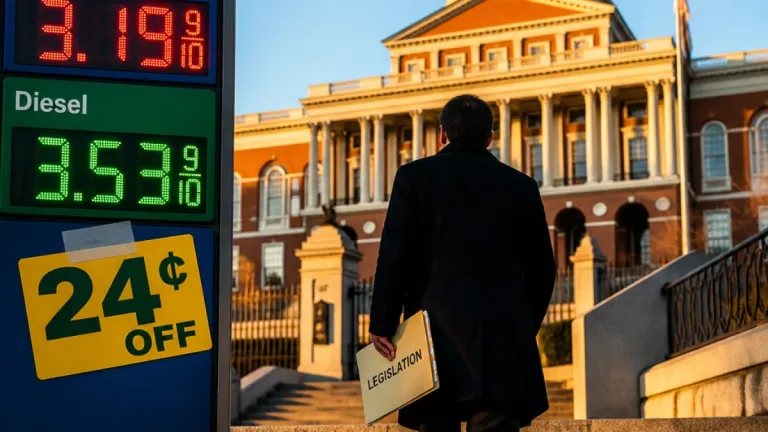

What changes for residents: New Jersey has taken a formal step toward expanding its nuclear generation. The new law directs the state to solicit proposals for construction of new nuclear facilities, a long-range move officials say could help stabilize the grid and produce low-carbon electricity for hundreds of thousands of homes — but it will take years to deliver any new power.
Gov. Mikie Sherrill signed the measure Monday in Trenton, calling it the Power New Jersey Act. The bill establishes a competitive process for developers to submit plans to the state’s Board of Public Utilities, which will evaluate proposals for new nuclear projects.
Why the state is pushing nuclear
Sherrill framed the legislation as a response to systemic problems that have raised costs and strained reliability over time, including underinvestment in the grid and weak oversight of utilities. In her remarks, she warned those issues will increase costs in the years ahead without policy changes.
"Today we're paying the price for problems that have built up over decades: underinvestment in our grid, weak oversight of utility companies, and delays in bureaucracy that strained our energy supply," said Sherrill.
Supporters argue nuclear power can provide steady, low-emission baseload electricity. Assemblyman Wayne DeAngelo, chairman of the Assembly Telecommunications and Utilities Committee, noted New Jersey’s existing reactors in South Jersey already produce power for roughly 3 million homes and said the state is ready to "go to the next level." The measure passed both legislative chambers unanimously.
Short-term concerns and ratepayer relief
Not all lawmakers are satisfied the bill addresses near-term affordability or reliability. Republican Assemblywoman Dawn Fantasia said constituents are more concerned with what happens in the immediate months and years. She warned that building new nuclear plants is a long-term strategy.
- The law creates a competitive procurement process through the Board of Public Utilities.
- Officials say projects could power hundreds of thousands of homes if approved and built.
- Lawmakers and the governor acknowledge benefits will be realized over a multi-year time frame.
Last week, Sherrill announced a separate set of measures aimed at near-term relief: a $25 credit for all 3.6 million energy ratepayers and an additional $150 credit for lower- and moderate-income households. Fantasia called the $25 credit a "nice gesture" but said it falls short for some constituents facing high bills, particularly in rural areas.
| Item | Details |
|---|---|
| Legislation | Power New Jersey Act — creates procurement process for new nuclear projects |
| Lead official | Gov. Mikie Sherrill |
| Immediate relief | $25 credit for all ratepayers; $150 credit for lower- and moderate-income families |
Energy developments are likely to provoke debates about cost, timeline and siting. While proponents emphasize nuclear’s potential to supply reliable, low-carbon power at scale, critics and some residents will press for clearer plans on how new plants would be financed, regulated and integrated with short-term measures to ease household utility costs.
The law does not itself build reactors; it establishes a process for proposals to be evaluated by the Board of Public Utilities. Any construction, financing and permitting would follow later proceedings and regulatory approvals.
State residents can expect a sequence of administrative and public-review steps in the coming years as proposals are submitted and reviewed. For now, officials positioned the law as a long-term policy shift to diversify New Jersey’s energy mix and address future grid needs.