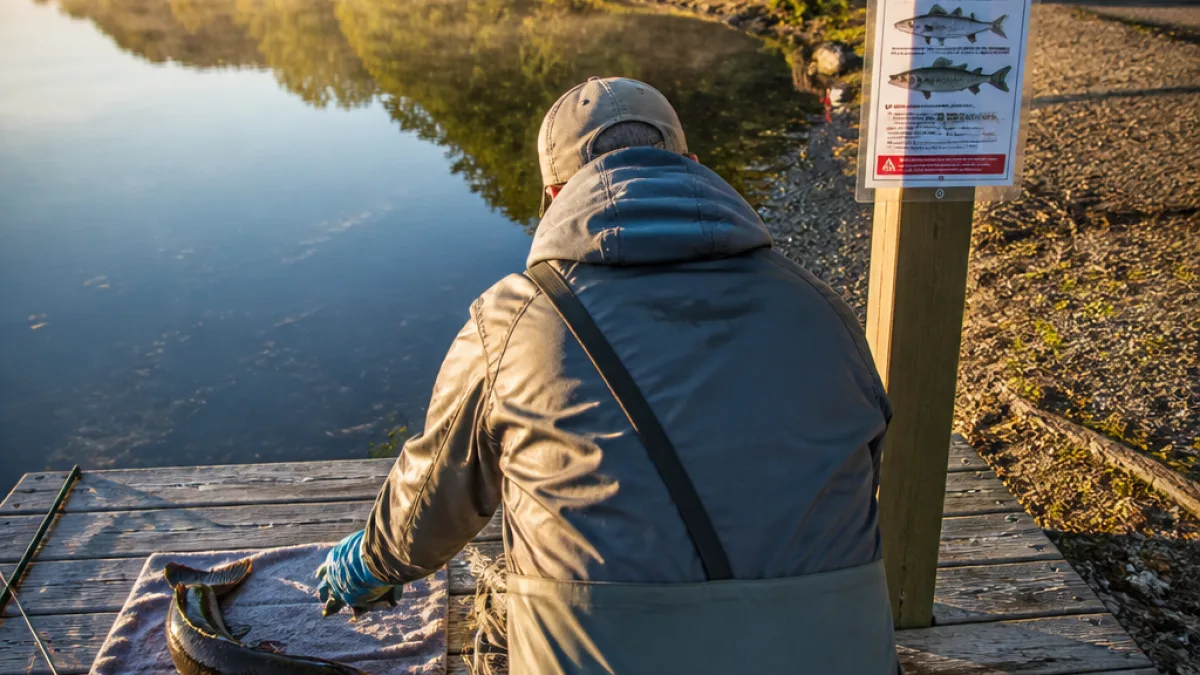
A Northern snakehead, a nonnative predatory fish native to Asia, was caught in Asa Pond in South Kingstown, Rhode Island wildlife officials confirmed Friday. The find has prompted guidance and a request for assistance from the state Division of Fish and Wildlife.
Why officials are concerned
Snakeheads are considered a high-risk invasive species because they can prey on native freshwater fish and compete for habitat and food. They also possess a primitive lung that allows them to survive out of water for hours and potentially travel short distances across land to reach other waterbodies.
Because of those traits, wildlife managers view any detection as serious. The Division of Fish and Wildlife urged anglers who encounter a snakehead to humanely kill the fish and notify state officials immediately so staff can collect the specimen and assess the situation.
What anglers and residents should do
- If you catch a snakehead, humanely kill it and handle it carefully—snakeheads can bite.
- Do not release the fish back into the water.
- Immediately report the catch to the Rhode Island Department of Environmental Management’s Division of Fish & Wildlife so they can collect the fish and document the occurrence.
| Contact | Information |
|---|---|
| DEM Division of Fish & Wildlife (email) | DEM.DFW@dem.ri.gov |
| Phone | 401-789-0281 |
The Division says snakeheads have been introduced illegally in parts of the United States, where they have at times established breeding populations. Officials did not provide additional details about when the fish was caught in Asa Pond or whether further sampling is underway.
For Rhode Islanders who use small ponds, lakes and streams for recreation or fishing, the discovery highlights the importance of routine precautions: clean gear and boats between waterbodies, never release unwanted fish, and report unusual catches to state authorities.
News Block will update this report as state biologists provide more information about any follow-up surveys or control efforts. In the meantime, anglers who believe they have located a snakehead should contact the Division of Fish & Wildlife at the email or phone number above.