Leaders of the Rhode Island AFL-CIO met Wednesday in an office building a block west of the State House and emerged without an endorsement in the Democratic primary for governor, a move that leaves organized labor officially neutral as the campaign heads into its final months.
No two-thirds majority, no endorsement
The labor federation, which represents more than 80,000 members across the state, requires a two-thirds vote of its 15-member executive committee to make an endorsement. The committee did not reach that threshold and "could not get to a consensus," according to Patrick Crowley, the organization's president.
"The consensus was, we could not get to a consensus,"
Crowley said the AFL-CIO will stay neutral in the governor's race, while allowing individual affiliates to endorse candidates on their own. The decision ends any prospect of a unified labor backing for either incumbent Gov. Dan McKee or challenger Helena Buonanno Foulkes ahead of the September primary.
What this means for the campaigns
The lack of a labor endorsement is a setback for Gov. McKee, whose campaign has been seeking ways to regain momentum. Recent polling has shown Foulkes ahead by substantial margins, and the governor has already failed to secure an endorsement from the state Democratic Party at its June convention. McKee captured the party and AFL-CIO endorsements in 2022 but has not repeated that success this cycle.
Foulkes, the former CVS executive who narrowly lost to McKee in a four-way primary in 2022, has seen the political tide shift in her favor this year. Polls cited in recent coverage showed her leading by roughly 20 percentage points, and she has added endorsements from many municipal Democratic committees, including McKee’s hometown of Cumberland.
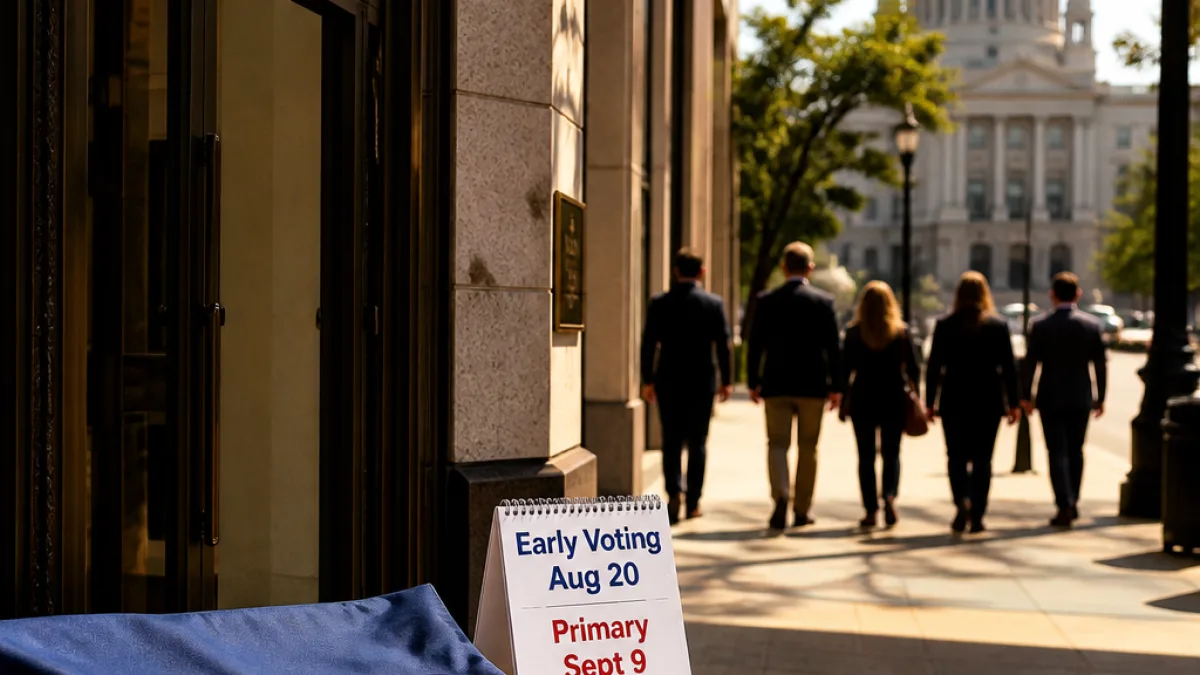
- Early voting begins: Aug. 20
- Primary election date: Sept. 9
- AFL-CIO executive committee size: 15 members
- Federation membership: more than 80,000
Context and local impact
Labor endorsements in Rhode Island have a history of moving votes and giving campaigns organizational muscle on the ground — from get-out-the-vote efforts to local mobilization. The AFL-CIO's choice to remain officially neutral may dilute a single coordinated labor message this cycle and could leave room for both campaigns to court union leadership and rank-and-file members independently.
Campaigns can still benefit if individual unions or municipal committees choose to take their own positions; Patrick Crowley’s statement explicitly permits affiliates to act on their own. That could result in a patchwork of labor endorsements rather than a unified bloc.
| Item | Detail |
|---|---|
| AFL-CIO endorsement rule | Two-thirds of 15-member executive committee |
| Federation membership | More than 80,000 |
| Early voting | Begins Aug. 20 |
| Primary date | Sept. 9 |
For Gov. McKee, who won the party and labor endorsements in 2022, the neutral stance is another sign that he must rebuild support as the primary approaches. Political analysts have noted he faces an uphill climb to reverse Foulkes’ lead. For Foulkes, the absence of an AFL-CIO endorsement does not appear to have halted her momentum; she entered the summer with strong polling, a financial advantage and a growing roster of local party endorsements.
The AFL-CIO’s choice illustrates broader dynamics in this year’s Democratic contest: established institutions like the party and organized labor have been less decisive than in past cycles, and voters may see an array of signals from municipal committees, unions and elected officials rather than a single, unified voice.
With early voting set to begin Aug. 20 and the primary on Sept. 9, both campaigns are likely to intensify outreach to union members and municipal officials in the weeks ahead. The AFL-CIO's neutrality sets the stage for a competitive closing stretch in a race that will help define Democratic politics in Rhode Island for the coming years.