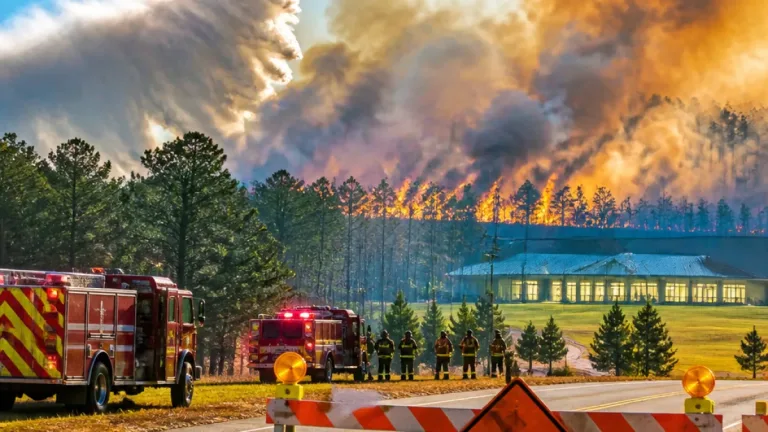
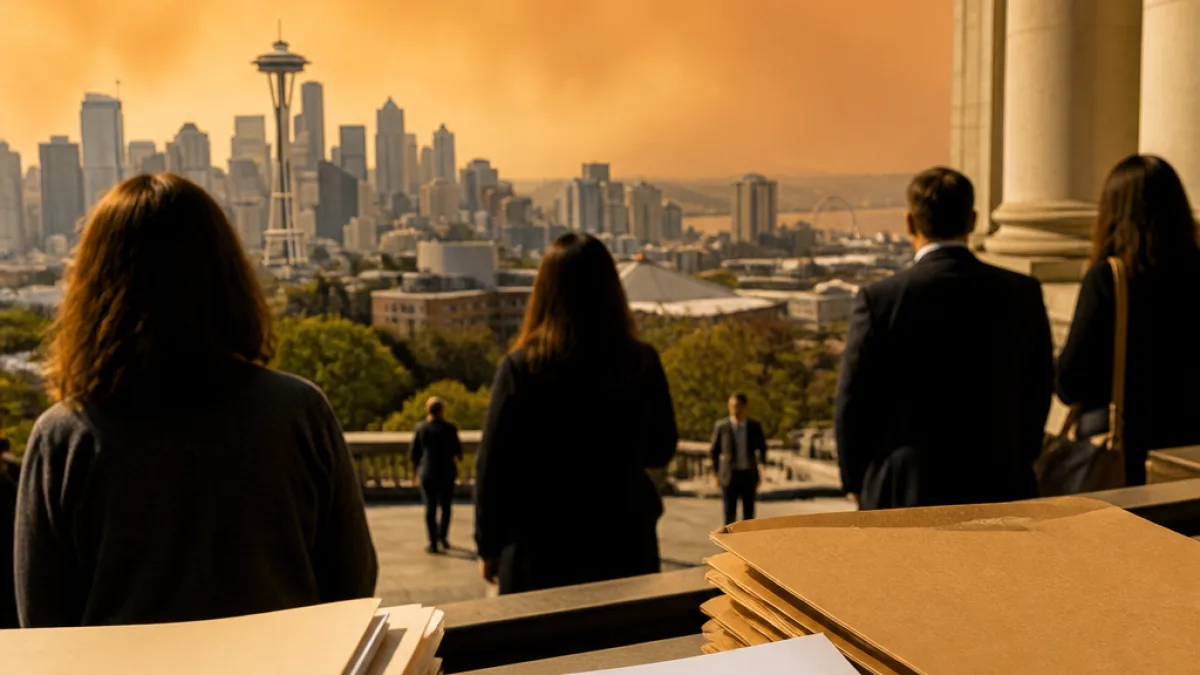
Smoke from the East Evans Creek Fire in southern Oregon has traveled hundreds of miles, reaching the Seattle area and contributing to a patchwork of degraded air quality across the Pacific Northwest. While Portland's air has so far remained relatively clear, officials say some communities in southern Oregon are recording conditions in the "unhealthy" category.
Regional reach — and consequences
Fire season is underway across North America, and the impacts are not limited to the burn area. This week, smoky skies and stagnant hot air have affected cities as distant as Chicago, Boston and Toronto, with much of that haze originating from Canadian blazes. In the Pacific Northwest, the smoke plume from East Evans Creek is one of several sources that has pushed particulate matter into urban corridors well north of the fire.
“It says, first of all, the federal government can declare a smoke emergency,” said Sen. Jeff Merkley. “Second of all, that makes small businesses eligible for grants to address the revenue losses that come from the emergency. And third, it provides grants to communities to improve their ability to handle the smoke.”
Public health advice and local response
Health and air-quality officials warn that wildfire smoke can trigger a range of symptoms when particulate levels meet or exceed the "unhealthy for sensitive groups" threshold. Matt Sorensen of the Lane Regional Air Protection Agency listed common early signs of smoke exposure, including itchy eyes and coughs, and noted that some people may experience headaches or changes in mood when smoke dims sunlight.
“When someone is exposed to wildfire smoke, especially when it's above ‘unhealthy for sensitive groups,’ you're going to start to notice maybe itchy eyes, raspy breath, potentially even a cough,” Sorensen said.
- Watch local air-quality indices and advisories before outdoor plans.
- People with respiratory or cardiac conditions, children and older adults should limit outdoor exertion when smoke levels rise.
- Consider creating a cleaner indoor air space — for example, using high-efficiency filters or designating a room with fewer windows.
Legislative effort aims to ease smoke impacts
In June, Sen. Jeff Merkley reintroduced the Wildfire Smoke Emergency Declaration Act. The bill would let the federal government declare a smoke emergency, unlock grants to help small businesses recover revenue losses caused by smoke, and provide funds for communities to set up smoke shelters and other preparedness measures. The proposal is currently in committee and has not yet had hearings.
| Location | Reported condition |
|---|---|
| Seattle | Receiving smoke from East Evans Creek Fire |
| Portland | Relatively unaffected |
| Parts of southern Oregon | "Unhealthy" air quality in some areas |
As the season progresses, communities across Oregon and the wider region will be watching both fire activity and federal policy developments that could affect emergency support. State and local agencies continue to monitor air quality and advise residents about precautions; KATU and regional officials are seeking further comment from parties who might object to the federal spending provisions in Merkley's proposal.