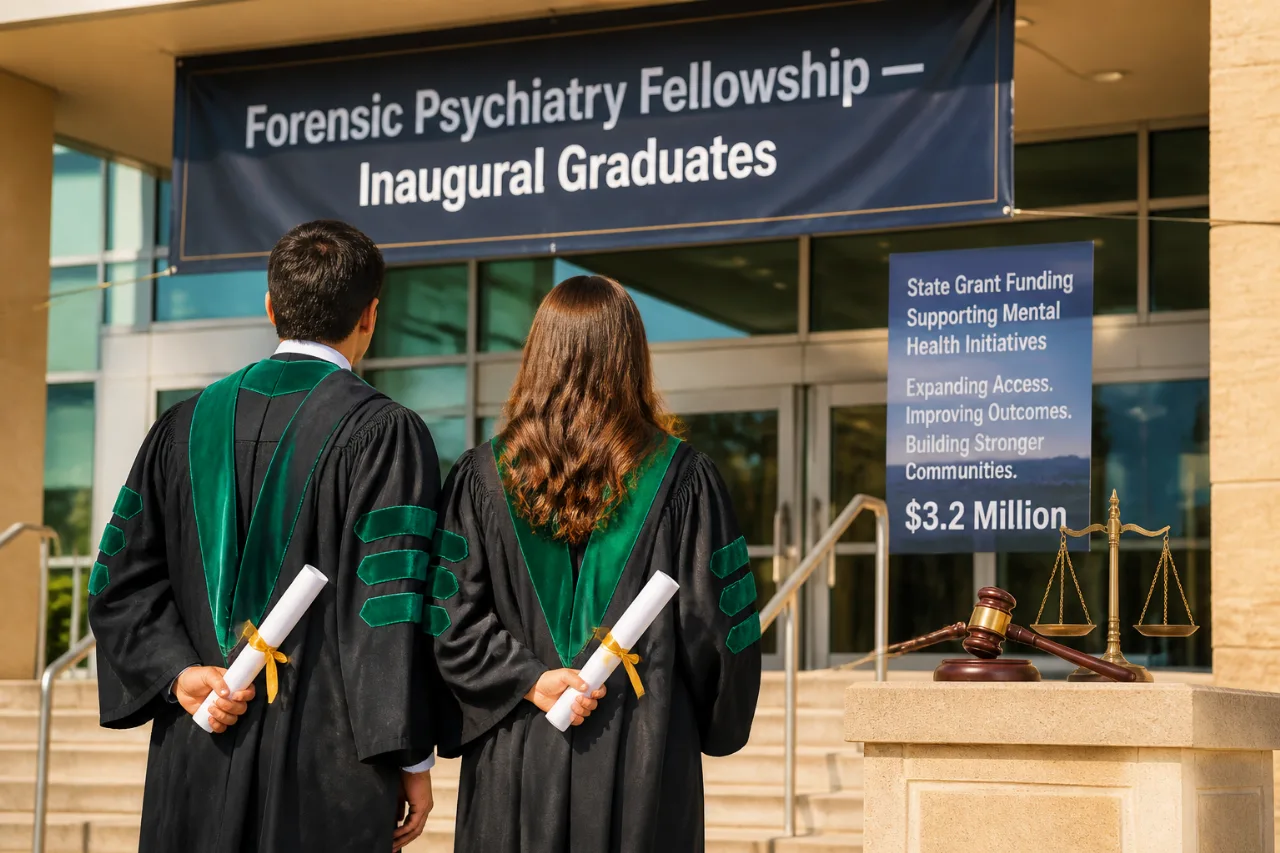
Texas Tech Health El Paso recognized the first graduates of its new forensic psychiatry fellowship in June, a step officials say seeks to address long-standing gaps in psychiatric expertise tied to court-ordered evaluations and other legal processes.
Inaugural fellows, program goals
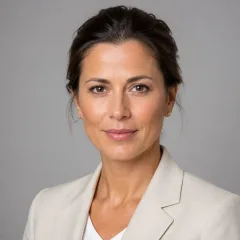
The Foster School of Medicine’s one-year fellowship welcomed Lizette Lara, M.D., and Eryn Pynes, M.D., both of whom completed psychiatry residencies at Texas Tech Health El Paso before entering the advanced training program. The fellowship provides focused education in forensic psychiatry — the subspecialty that applies psychiatric knowledge to legal questions and judicial proceedings.
“We do a lot of court-ordered evaluations,” said Texas Tech Health El Paso Assistant Professor of Psychiatry Patricia Ortiz, M.D., who leads the fellowship program. “One of the most common questions that we receive from the court is whether or not someone is competent to stand trial.”
Shortage driving need for specialists
State officials and program leaders point to a broader workforce problem: Texas is projected to face a net shortfall of 1,208 psychiatrists by 2030, according to a Texas Health and Human Services report cited by the program. That gap is felt more acutely in fellowship-trained forensic psychiatrists, who are in especially short supply and create bottlenecks for timely evaluations and treatment within the judicial system.
State backing for expansion
In March, Gov. Greg Abbott announced additional grant funding to expand forensic psychiatry fellowships at nine Texas medical schools, including Texas Tech Health El Paso. Each participating institution was slated to receive $555,555 to support program development and capacity.
- Number of schools receiving grants: 9
- Grant amount per institution: $555,555
- Projected statewide psychiatrist shortfall by 2030: 1,208
Regional implications
Program leaders described West Texas as “critically underserved” in mental health care, particularly in forensic psychiatry, and framed the fellowship as a local contribution to relieving evaluation backlogs and improving access to expert psychiatric opinions for courts and correctional settings. The inaugural fellows are seen as the first cohort to help fill that gap in the region.
| Item | Value |
|---|---|
| Fellows graduated | 2 (Lizette Lara, M.D.; Eryn Pynes, M.D.) |
| Grant recipients (statewide) | 9 medical schools |
| Grant amount per school | $555,555 |
| Projected psychiatrist shortfall (2030) | 1,208 |
The fellowship director emphasized the practical nature of forensic work — from competency evaluations to assessments used in sentencing and civil matters — and the ways additional training could ease systemic delays. Expanding fellowship slots and building local expertise are presented as immediate steps to reduce evaluation wait times and improve continuity of care for justice-involved patients.
The program is part of a broader state-level push to increase forensic psychiatry training capacity; how quickly expanded training will translate into measurable reductions in court backlogs and improved access across rural and urban regions remains an area for follow-up reporting.