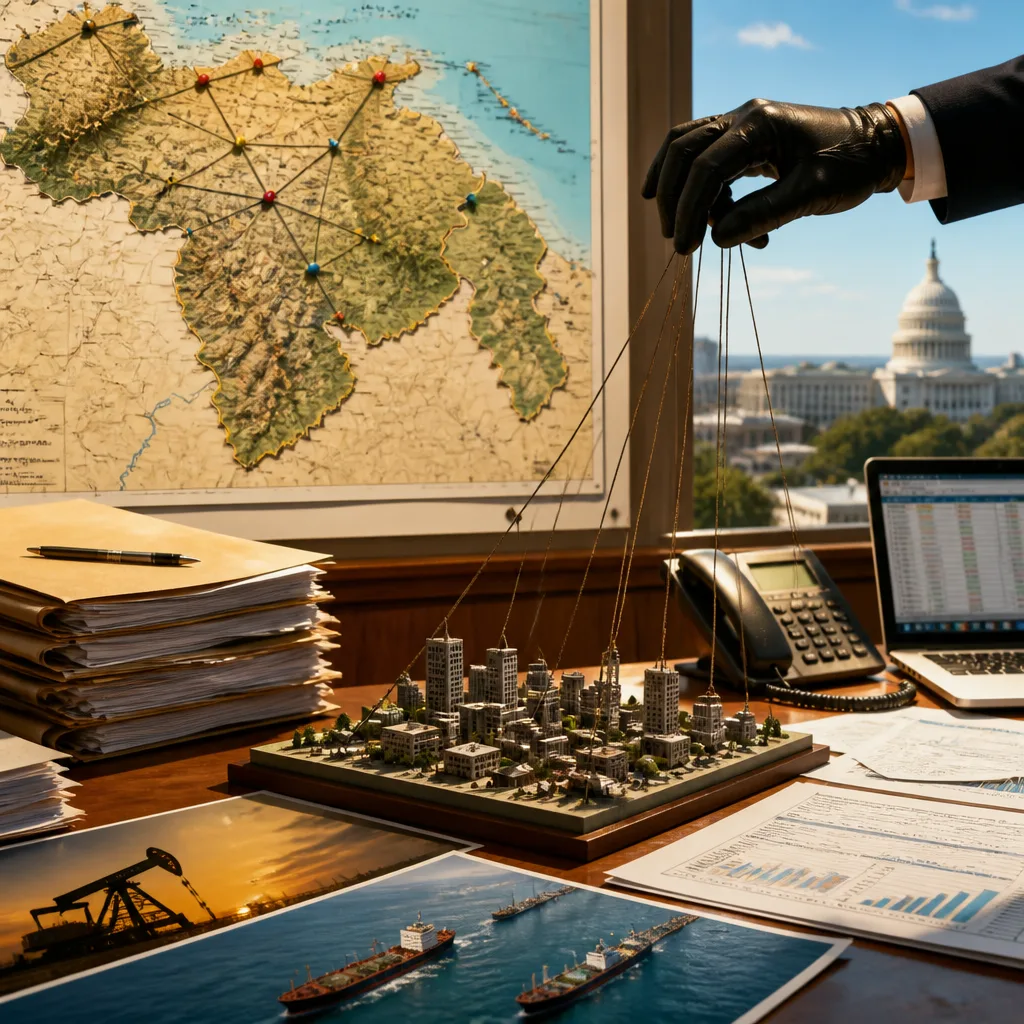
Secretary of State Marco Rubio has, in recent months, taken on an expansive and direct role in the governance of Venezuela, exercising control over the country’s finances, the allocation of its natural resources and key elements of its government — all while based in Washington, according to interviews with officials and others familiar with the situation.
Washington as an operational center
The arrangement has emerged after a dramatic U.S. operation that removed President Nicolás Maduro from power. In the months that followed, senior U.S. officials say Rubio has become the central figure in shaping the immediate post-capture structure in Caracas. His influence has been compared, in scale and function, to the role played by U.S. authorities who oversaw Iraq following the 2003 invasion.
“Maybe he should dispatch Mr. Rubio permanently to Caracas,”
The remark — reportedly offered by President Trump in the Oval Office and framed by aides as a joke — underscored the extent to which senior White House officials see Rubio’s involvement as consequential. Yet the reach of Rubio’s authority does not rely on a physical move: sources describe him as effectively running aspects of Venezuela from Washington.
Areas of control and their consequences
Interviews with more than a dozen officials and people close to both governments provide a consistent picture: Rubio is directing financial policy, overseeing the distribution of Venezuela’s natural resources and influencing personnel decisions within the interim structures now operating in Caracas. Those interventions have operational consequences for everyday governance in Venezuela and for longer-term U.S. policy objectives in the region.
- Finances: Oversight and control of fiscal and monetary levers used to stabilize post-capture administration.
- Natural resources: Direction of how the country’s energy and commodity outputs are managed and allocated.
- Government operations: Influence over appointments and the functioning of interim authorities.
| Area | Rubio's Reported Role |
|---|---|
| Finances | Effective control |
| Natural resources | Distribution oversight |
| Government | Operational influence |
Observers note that the extent of a U.S. official’s practical control over another sovereign state raises questions about accountability, the limits of executive authority and how the administration will manage both short-term stabilization and long-term political transition. The comparison to prior U.S. post-conflict administrations frames Rubio’s role as historically notable.
As the administration continues to implement its Venezuela strategy, the concentration of authority in a single cabinet official based in Washington will likely attract further scrutiny from Congress, international partners and Venezuelan actors who must now navigate a new and unusually centralized channel of American influence.