
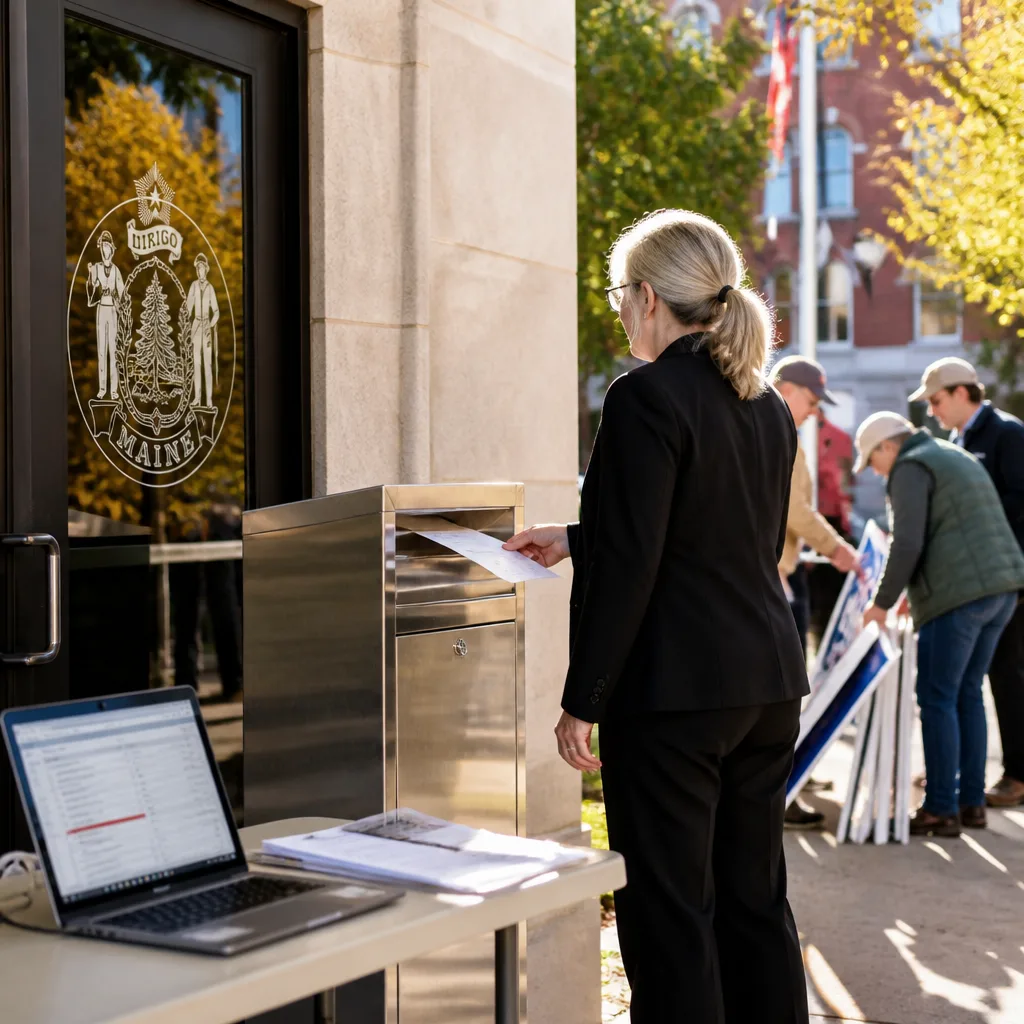
Graham Platner officially withdrew from the race for the U.S. Senate in Maine on Friday after submitting paperwork to the secretary of state's office, a move that clears the way for the state Democratic Party to select a new nominee before an end-of-July deadline and complicates Democrats’ strategy to flip a crucial seat.
What happened and why it matters
The secretary of state's office received Platner’s formal notice of withdrawal, which was reflected on its online listing. The action follows Platner’s public announcement two days earlier that he would leave the race amid an allegation of sexual assault he has denied. His campaign had drawn national attention and support from progressive figures, including Senators and Representatives who had backed his outsider message.
"The Mainers who had nominated him 'voted for a new kind of politics' that is 'representative of people down here in the real world — not billionaires, oligarchs, or the political establishment,'"
Platner also wrote that he wished to "further the movement we have built together and the future we believe in," language he posted in a letter to the secretary of state's office and on social media.
Immediate consequences for Democrats
Maine is widely viewed as a key state in the contest for control of the narrowly divided Senate. Democrats had been searching for a candidate able to defeat incumbent Republican Sen. Susan Collins. State law allows the party to replace a nominee before the general election, but the replacement must be named by July 27, giving party officials and hopefuls a compressed timeline to organize a selection process.
- The state Democratic Party’s committee pre-approved holding a nominating convention if Platner withdrew; more than 100 committee members signed off on that plan.
- Party officials have not publicly set a date for the convention or detailed the replacement timeline beyond the statutory July 27 deadline.
- Several prospective candidates have already begun positioning themselves for the nomination.
| Item | Date / status |
|---|---|
| Platner formal withdrawal filed | Friday, July 10, 2026 (reflected online) |
| Deadline to name replacement | July 27, 2026 |
| Nomination mechanism (party-approved) | Nominating convention (committee pre-approved) |
The development shifts the calendar and strategic calculations for both parties. For Democrats, the task is to coalesce around a candidate who can both unify the party base after a contentious primary and compete statewide against an established Republican incumbent. For Republicans, the scramble offers a new opening to redefine the race against a different opponent on a condensed timetable.
Context and next steps
Platner’s campaign had been characterized as an outsider bid that attracted endorsements from progressive leaders. In withdrawing, Platner closed a tumultuous chapter in what had become one of the most watched Democratic Senate nominating contests of the cycle.
Party officials did not immediately respond to requests for comment Friday. With the July 27 statutory cutoff approaching, Maine Democrats must now finalize a replacement plan and select a nominee who can engage quickly in a high-stakes general-election campaign.
The outcome will factor into broader national calculations about which party controls the Senate and how both sides allocate resources in the months ahead.