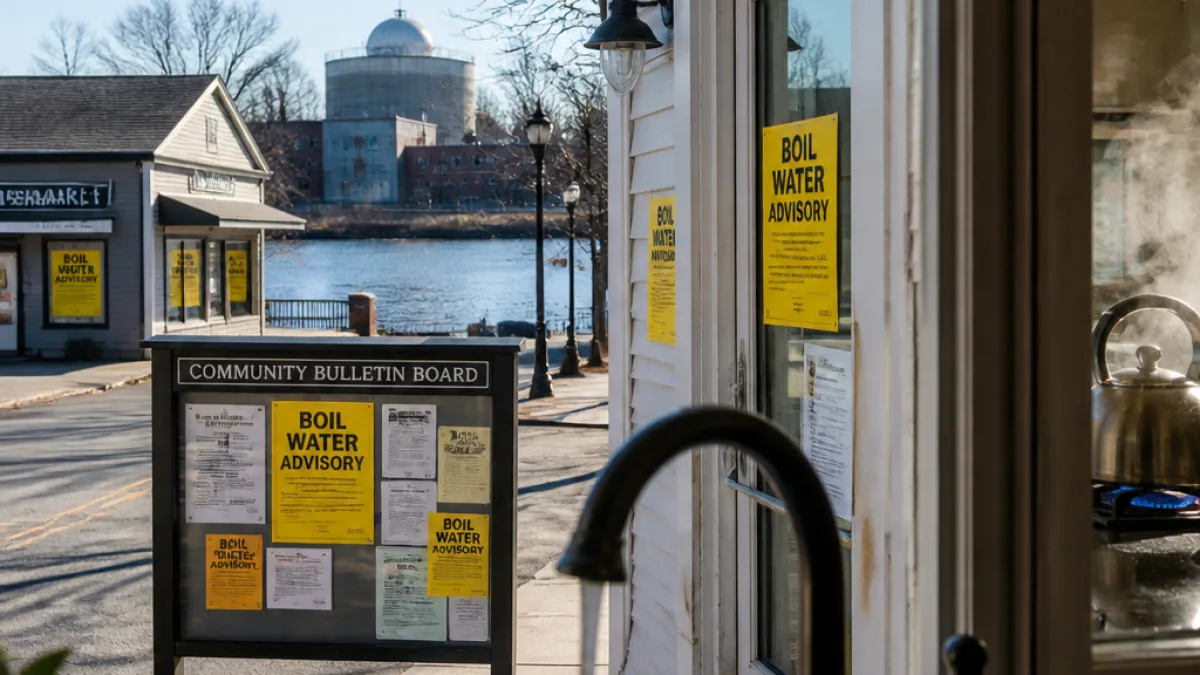
Residents of several Connecticut shoreline communities were told Friday to boil their tap water before drinking or using it for food preparation after routine monitoring identified E. coli bacteria in a system serving Essex.
The Connecticut Water Company issued the advisory covering Chester, Clinton, Deep River, Essex, Guilford, Madison, Old Saybrook and Westbrook. The notice was also shared by the Old Saybrook Police Department, which alerted local residents to the precaution.
What residents should do now
Officials instructed residents to bring tap water to a rolling boil for one minute and then allow it to cool before using it for drinking, preparing food, making ice, brushing teeth or washing dishes. The advisory specifically warns that vulnerable groups — infants, young children, the elderly and people with severely compromised immune systems — may face higher health risks.
"We expect results from those tests in 24 hours," the company said in its advisory.
- Boil water for at least one minute before use.
- Use boiled or bottled water for consumption and food preparation until tests clear the supply.
- Do not use unboiled tap water for infant formula or oral hygiene.
Where the advisory applies
The advisory affects eight towns along the Connecticut shoreline. The table below lists the communities named by the company.
| Town |
|---|
| Chester |
| Clinton |
| Deep River |
| Essex |
| Guilford |
| Madison |
| Old Saybrook |
| Westbrook |
Testing and next steps
The Connecticut Water Company said the bacteria were identified during routine sampling. Additional water samples have been collected and are undergoing analysis; the company said it expects to receive results within about 24 hours. Officials will lift the advisory once follow-up testing shows the water meets safety standards.
Residents seeking more information should monitor announcements from their town government, the Connecticut Water Company and local law enforcement. Those who rely on home water treatment devices should check with the manufacturer or supplier to confirm whether their system provides protection against bacterial contamination.
For now, officials emphasize the simple precaution of boiling tap water to reduce the risk of illness while testing continues.