Volunteers and arborists working to prepare the Oregon Country Fair this week are also watching for an unwelcome arrival: the emerald ash borer. Organizers say ash trees make up a dominant share of the fair’s canopy, and experts warn that an infestation could fundamentally change the look and function of the site.
Monitoring now, planning for big losses
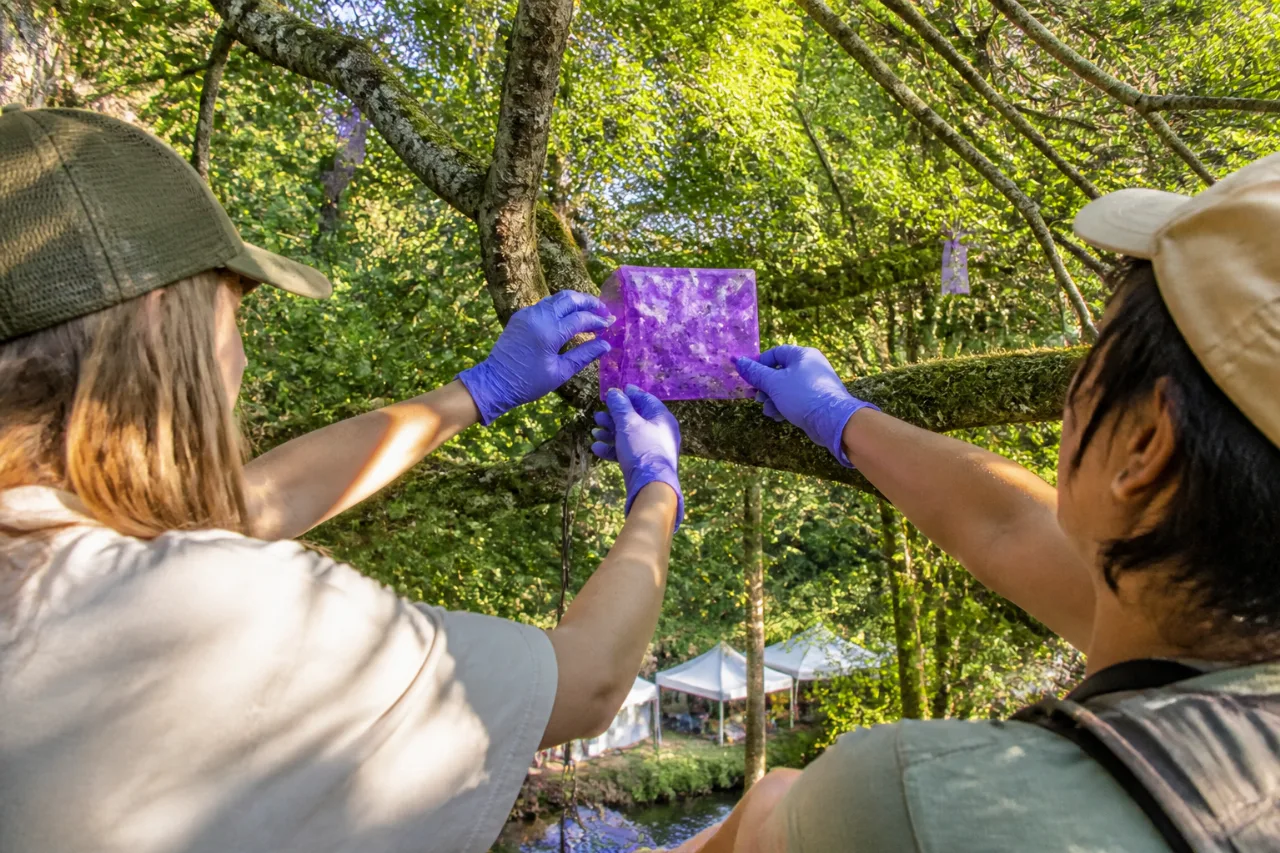
On a weekday during setup, volunteer arborists Kevin Hillery and Em “EmRo” Roberts removed a sticky purple prism trap from an ash limb and examined its surface for the telltale metallic green beetles or their lookalikes. The traps are scattered across the fairgrounds and were supplied by a state agency to help detect the beetle’s presence early.
Organizers estimate that roughly 75% of the trees on the grounds are ash — trees that stabilize soil, shade streams and fields and form the visual backdrop for the festival’s structures and artwork. If the emerald ash borer arrives and becomes established, most of those trees could die within a decade, volunteers said, forcing difficult decisions about restoration, erosion control and visitor comfort.
Field experience meets long-term risk
Roberts is an associate professor of arboriculture who has worked on emerald ash borer response for state forestry programs, and Hillery brings decades of arborist experience and long service at the fair. Their presence reflects a larger shift across Oregon: community groups, land managers and state agencies are moving from reactive removal to active monitoring and planning ahead of invasive pests.
- Volunteer arborists are inspecting traps placed throughout the grounds.
- Purple prism traps are used to detect emerald ash borer and are checked regularly.
- Planning includes anticipating tree loss, erosion control and shade replacement if infestations occur.
For an event site where ash trees provide critical ecological and recreational functions, the stakes are practical as well as aesthetic: lost shade will affect attendees and wildlife; lost root systems can mean more erosion along streambanks; and replacements take years to mature.
| Item | Detail |
|---|---|
| Estimated portion of ash trees | 75% |
| Detection method | Purple prism traps checked by volunteer arborists |
| Timeline if beetle establishes | Most ash could be dead within a decade |
What happens at the Country Fair matters beyond the festival itself. The site is a microcosm for community-managed green spaces across the state — places where a single invasive insect could force expensive removals, change flood and erosion dynamics and require long-term replanting programs. The volunteers’ work now is an effort to buy time and information: early detection may allow resource managers to limit spread or prioritize removals.
As fair staff and hundreds of volunteers complete setup, the traps and the steady inspections are a quiet reminder that beloved public places are vulnerable to ecological threats arriving from far away. Preparing for that future will be part of the conversation at the fair this summer as arborists and organizers balance celebration with stewardship.