Officials: older adults at heightened risk during extended heat advisory
Local public health leaders are urging neighbors and family members to check on older adults after the National Weather Service extended a heat advisory into a second week, with temperatures remaining above typical levels through at least July 14. Health officials emphasized that seniors are disproportionately vulnerable to heat-related illness and death, and called for community action to reduce those risks.
The advisory affects large portions of the region, where daytime highs have been well above normal and nighttime temperatures are staying warm enough to interfere with the body’s ability to recover. Officials point out that this combination — hot days and warm nights — is particularly dangerous for older people.
What public health agencies are recommending
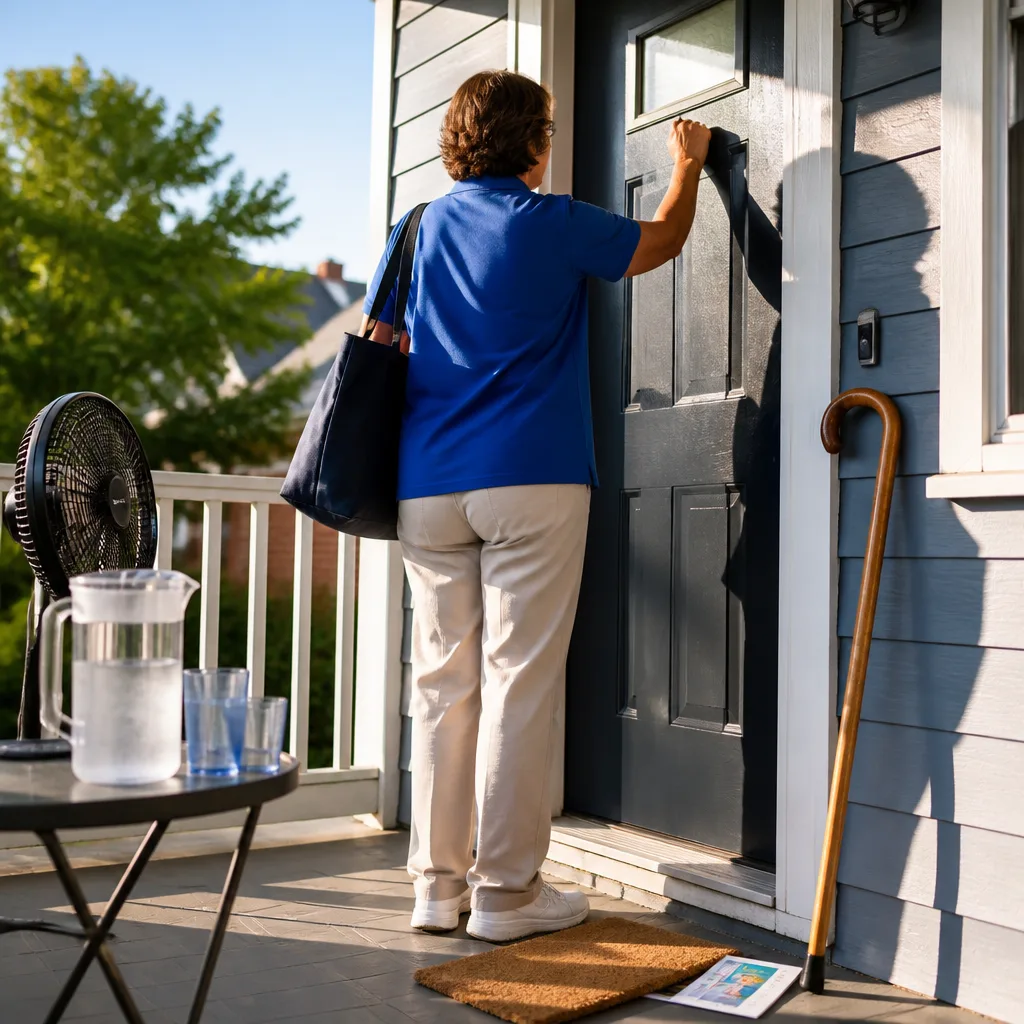
The public guidance stresses practical, immediate steps that household members or neighbors can take to protect older adults. Health departments highlighted three core actions:
- Ensure adequate hydration: Make sure older adults are drinking enough fluids throughout the day.
- Access to cooling: Confirm that air conditioning is available, functioning and being used when needed.
- Appropriate clothing: Encourage wearing light, loose-fitting clothes to help the body shed heat.
Officials also advised that if someone is showing symptoms of heat-related illness — such as dizziness, rapid heartbeat, fainting or confusion — callers should contact emergency services immediately.
Scale of the risk and vulnerable populations
In this city, nearly 24,000 seniors live locally, representing about one in six residents. National analyses show the oldest adults face the greatest risk: mortality from heat-related causes among people aged 85 and older is more than 100 times the rate observed among children ages 5 to 14, according to Centers for Disease Control and Prevention data cited by local officials.
| Measure | Value |
|---|---|
| Local seniors | ~24,000 |
| Relative mortality risk (85+ vs. 5–14) | >100x |
Context and public resources
The advisory was first issued on July 7 and was set to expire earlier this week before being extended by county health authorities. Forecasters expect daytime highs to return to the upper 80s later in the week before temperatures may rise again the following week. Officials cautioned that even modest overnight temperatures — forecast lows near 62 degrees in some areas — can prevent the body from cooling down sufficiently during sleep, compounding risk for older adults.
State and local agencies are directing the public to central guidance for heat preparedness. The state’s heat-safety portal, HeatReady.ca.gov, offers information on recognizing heat-related illness and where to find cooling centers and other supports.
Equity concerns and housing instability
Health leaders noted that the risk is amplified for people in temporary or substandard housing. In nearby communities, residents displaced by prior wildfires remain in transitional housing that may lack reliable air conditioning, increasing exposure risk for older occupants. Public health officials said that identifying and supporting those households is a priority as the advisory continues.
As the heat advisory remains in effect, public health departments are asking communities to treat older neighbors and relatives as a public-health priority: check that they are cool, hydrated and able to get emergency care if symptoms appear. For official guidance and resources, residents should consult the county public health department and the state’s HeatReady page.
This report presents current public guidance and statistics provided by local health officials and the U.S. Centers for Disease Control and Prevention. It does not offer personalized medical advice.