
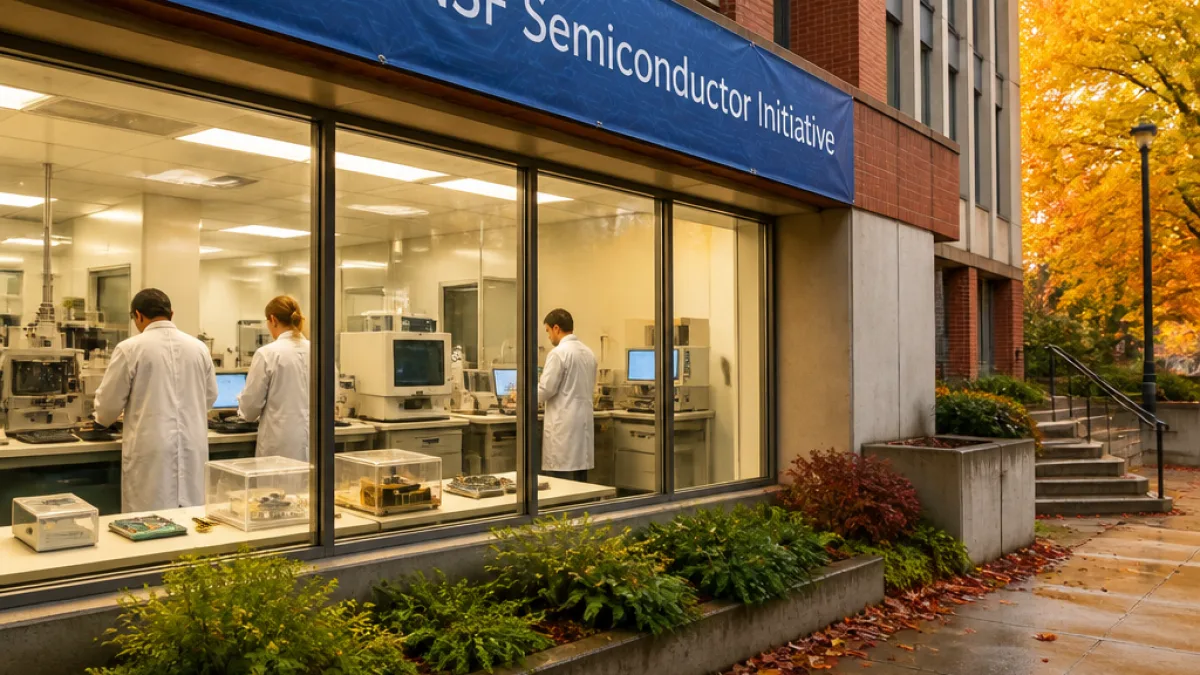
CORVALLIS — Oregon is set to receive up to $160 million from the National Science Foundation to bolster semiconductor production and workforce development, officials said Tuesday. The funding will back a new initiative called Frontiers of Advanced Semiconductor Technology (FAST), led by Oregon State University and backed by more than 100 partners.
Addressing a shifting industry landscape
The investment arrives amid fresh concern that Oregon’s hard-won lead in semiconductors could be challenged. A recent University of Oregon report documented rapid expansion of the state’s semiconductor cluster over many years—largely fueled by public investment—but warned of growing risks after major employer Intel announced more than 3,000 layoffs in Oregon last year.
State economic-development leaders framed FAST as a way to diversify the state’s industrial base and strengthen the semiconductor supply chain so that other companies and startups can find a foothold here.
Training, startups and supply-chain resilience
FAST’s work will include direct support for public schools and structured pathways from classroom to employment. The initiative emphasizes hands-on learning, giving students the chance to train on real equipment and participate in research that connects to industry needs.
"We had a particular lens in this study towards the supply chain, as that was a real critical sort of nexus for Oregon," said Damon Runberg of Business Oregon.
FAST also intends to help early-stage companies access the relationships and resources needed to scale, a priority state leaders have highlighted as they seek to reduce dependence on any single employer and retain manufacturing and engineering jobs in Oregon.
- Lead institution: Oregon State University
- Program name: Frontiers of Advanced Semiconductor Technology (FAST)
- Funding: Up to $160 million from the National Science Foundation
- Focus areas: K–12 and higher education pathways, hands-on training, startup support, supply-chain development
Why this matters locally
For communities from Corvallis to the Portland area, semiconductor work has been a major source of high-wage employment and supplier opportunities. The state’s dependence on a few large employers has driven repeated calls for broader growth along the full chip manufacturing supply chain—from materials and equipment to testing and packaging.
By routing federal research dollars into a coalition of universities, companies and local partners, the FAST initiative aims to keep more of the industry’s economic activity in Oregon and to create clearer career routes for students who might otherwise leave the region for jobs elsewhere.
| Area | FAST emphasis |
|---|---|
| Education | Hands-on labs, K–12 pathways, university research training |
| Industry | Startup support, supplier connections, talent pipelines |
| Economic impact | Diversify employers, strengthen supply chain resilience |
Officials contend that combining federal funding with regional coordination can prevent further erosion of Oregon’s semiconductor capacity and help produce the technicians, engineers and entrepreneurs the industry needs. The precise distribution of the NSF award and the timeline for projects under FAST were not detailed in the announcement.
As the program gets underway, local educators, community colleges and business groups will be closely watching how funds translate into training slots, lab access for students, and tangible support for startups and smaller suppliers across the state.