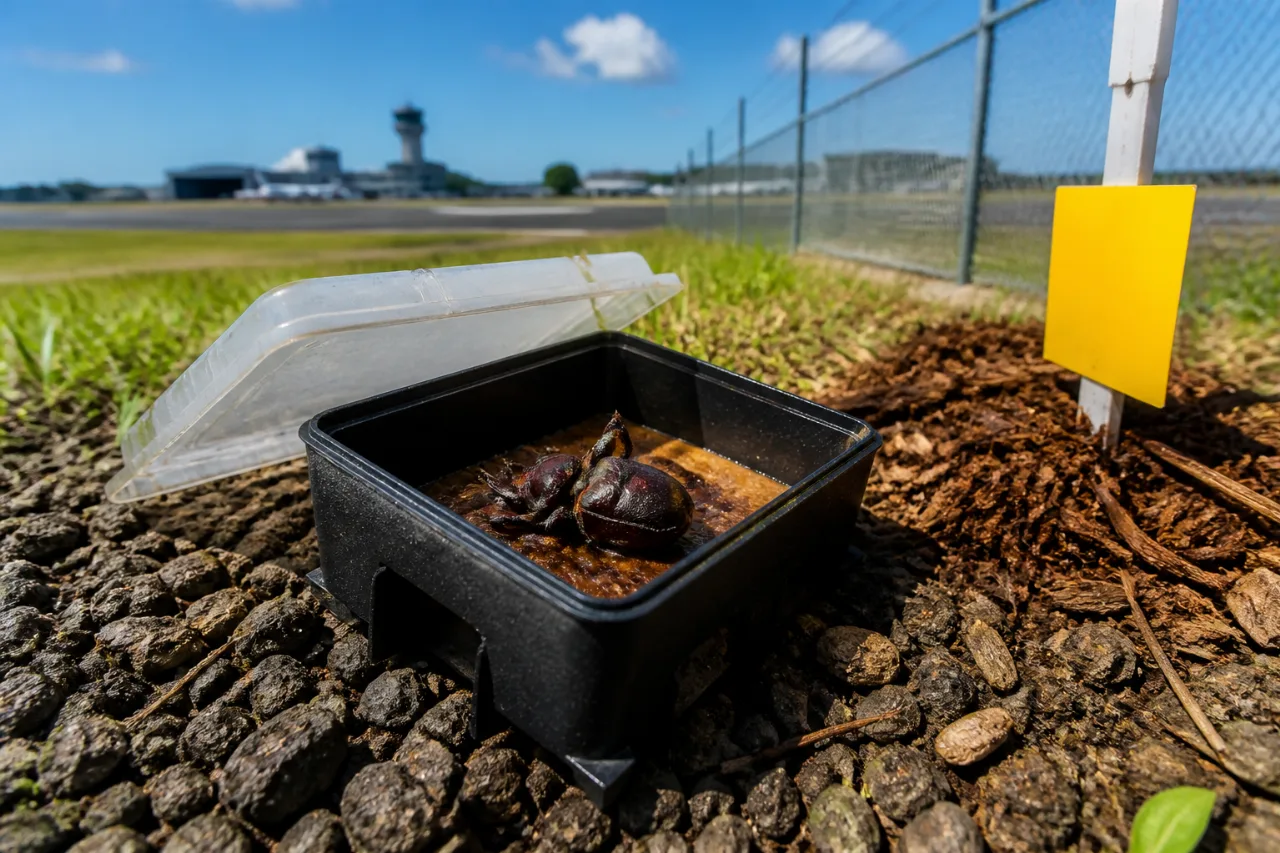
HILO — A dead female coconut rhinoceros beetle was discovered Monday in a detection trap at Hilo International Airport, officials said, prompting expanded surveillance and community outreach to prevent further spread of the pest on the Big Island.
What was found and where
Staff with the Big Island Invasive Species Committee located the insect in a trap at the airport. The beetle is believed to have entered the trap sometime after the previous check on June 16. Officials say this is the second detection in Hilo; last year a dead beetle was recovered inside a retail store near a mulch display and was suspected to have been shipped in from Oahu.
Ongoing response
Follow-up monitoring is already under way. Additional detection traps are being placed around the airport, and Hawaii County is coordinating with partner agencies to deploy detection dogs to survey mulch and green-waste sites in the coming week.
- Monitoring program: Island harbors and airports have been monitored since 2017 as part of the Hawaii Invasive Species Council’s Ports of Entry Monitoring program.
- Local action: More traps are being installed near the discovery site and canine teams will inspect nearby mulch and green waste.
- Community role: Residents can host panel traps and report sightings directly to the Big Island Invasive Species Committee.
Why officials are concerned
Coconut rhinoceros beetles bore into palms and can kill trees from the inside, posing a risk to ornamental palms, coconut stands and the landscape industry. Because the beetles can be moved in contaminated mulch, soil or plant material, ports of entry are focal points for early detection and containment.
How residents can help
Officials urge vigilance when buying or transporting mulch, compost or soil products. Practical steps recommended by the Big Island Invasive Species Committee include turning compost piles to search for larvae, sealing and photographing any suspect larvae for reporting, and avoiding packaged products with tears or holes that could harbor pests.
| Item | Details |
|---|---|
| Most recent trap check | June 16 (previous) |
| Discovery | Dead female CRB found at Hilo International Airport |
| Past Hilo detection | Last year: dead beetle in retail store mulch display (suspected from Oahu) |
Community members in Keaukaha, Panaewa and the Hilo area can volunteer to host a CRB panel trap on their property by calling (808) 933-3340. Suspected sightings or specimens should be reported by email to biisc@hawaii.edu or via the Big Island Invasive Species Committee’s Facebook or Instagram pages. The committee also maintains an online reporting option for digital submissions.
Preventing establishment and spread of invasive pests remains a priority statewide. Early detection at ports and quick coordination among county, state and partner agencies increase the chances of containment and limit damage to Hawaii’s palms and landscapes.
Leilani Akana is the Hawaii correspondent for News Block.